
Octa Mach completed the supply of a ball mill delivered to Tanzania for a gold ore processing project. The supplied equipment was one Φ1500 × 4500 wet overflow ball mill designed to grind pre-crushed gold-bearing ore before hydrocyclone classification and downstream mineral recovery.
The selected model has a reference processing capacity of 3.5–8 t/h, an installed motor power of 110 kW and a nominal discharge-size range of 0.074–0.4 mm. Wet grinding and overflow discharge were selected to produce a pumpable slurry and support stable closed-circuit classification.
In addition to equipment manufacturing, the project covered export packing, transport protection, component identification and installation support. These preparations helped the customer move efficiently from equipment receiving to site assembly and commissioning.
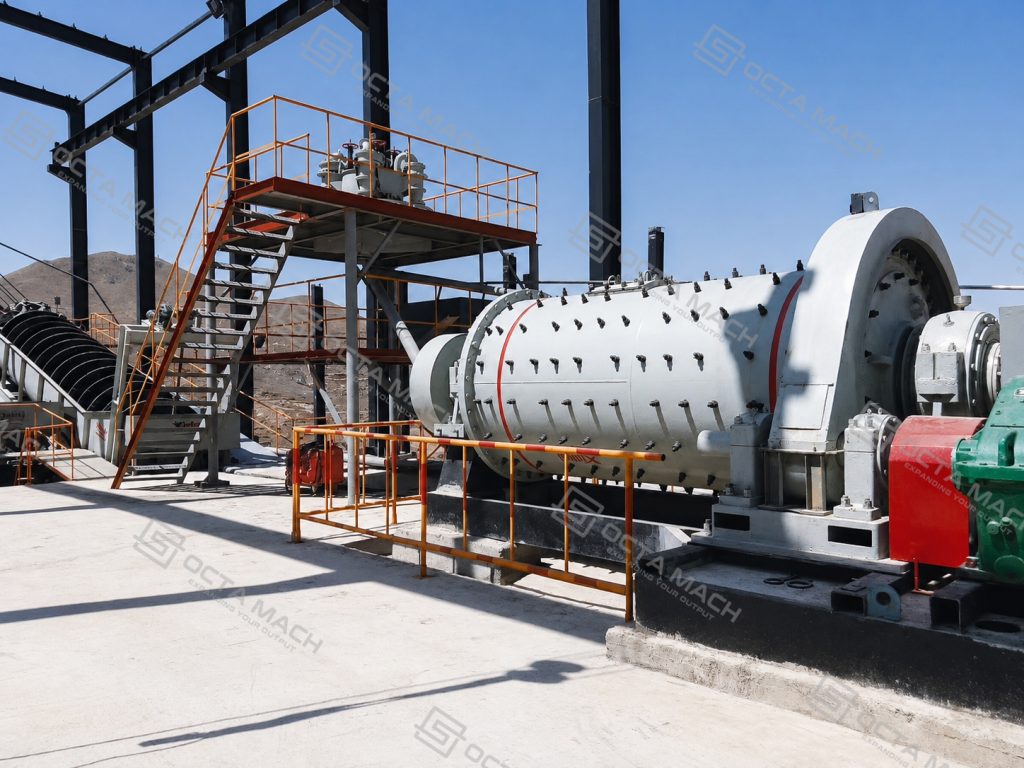
Tanzania Gold Ore Project Overview
| Project Item | Project Information |
|---|---|
| Project Location | Tanzania |
| Supplied Equipment | Wet Overflow Ball Mill |
| Model | Φ1500 × 4500 |
| Quantity | 1 Set |
| Cylinder Size | Φ1500 × 4500 mm |
| Cylinder Speed | 27 r/min |
| Grinding Media Load | 10.5 t |
| Maximum Feed Size | ≤25 mm |
| Nominal Discharge Size | 0.074–0.4 mm |
| Reference Processing Capacity | 3.5–8 t/h |
| Installed Motor Power | 110 kW |
| Grinding Method | Wet Grinding |
| Discharge Type | Overflow Discharge |
| Processed Material | Gold-Bearing Ore |
| Classification Equipment | Hydrocyclone |
| Main Process Duty | Fine Grinding and Mineral Liberation |
| Downstream Stage | Gold Recovery |
| Service Scope | Equipment Supply, Export Packing and Installation Support |
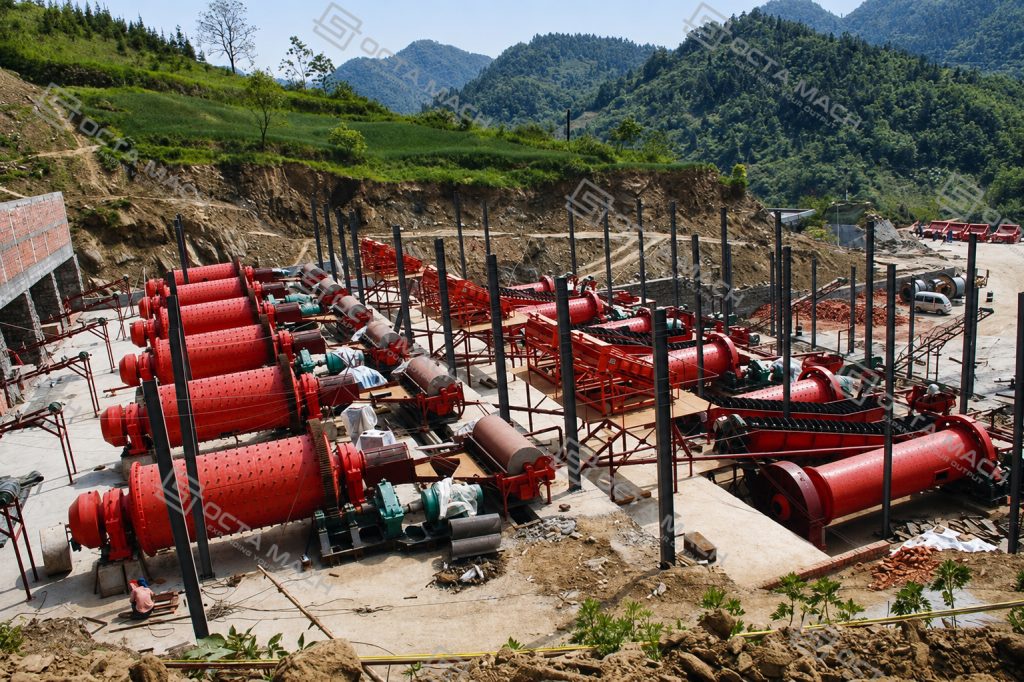
Gold Ore Grinding Requirements
After primary and secondary crushing, gold-bearing ore may still contain valuable particles locked within quartz, sulfide minerals or other gangue. Further size reduction is therefore required before the gold can be recovered effectively through gravity separation, flotation, leaching or a combined beneficiation process.
The ball mill for gold ore performs this fine-grinding duty through repeated impact and abrasion. As the cylinder rotates, the internal liners lift the steel grinding media and ore particles. The charge then falls and rolls inside the cylinder, progressively reducing the ore before the ground material leaves through the discharge system.
The objective of grinding is to achieve sufficient mineral liberation while maintaining a particle-size distribution suitable for the downstream recovery process. Grinding the material as finely as possible is not necessarily beneficial. If the product remains too coarse, valuable minerals may not be fully liberated. Excessive grinding, however, increases power consumption, liner wear and grinding-media consumption while potentially producing unnecessary ultrafine particles.
For this project, wet grinding allows the discharged material to be transported as slurry, while the overflow-discharge arrangement provides suitable residence time for controlled fine grinding. The selected configuration also supports closed-circuit operation with a hydrocyclone.
Actual grinding performance depends on the ore hardness, initial feed-size distribution, target product fineness, slurry density, grinding-media condition and circulating load. These variables must be controlled together rather than evaluating the mill only by its hourly throughput.
Ball Mill Solution for the Tanzania Project
The Tanzania project adopted one Φ1500 × 4500 wet overflow gold ore ball mill with an installed motor power of 110 kW. The cylinder operates at 27 r/min and has a specified grinding-media load of 10.5 tonnes.
The selected model accepts a maximum feed size of 25 mm and provides a nominal discharge-size range of 0.074–0.4 mm. Its reference processing capacity is 3.5–8 t/h. Actual output and product fineness depend on the physical properties of the ore and the operating condition of the complete grinding circuit.
The equipment includes the mill cylinder, feed and discharge ends, internal liners, main bearing assemblies, girth gear, pinion, drive system and lubrication components. These assemblies work together to maintain stable cylinder rotation under the combined load of ore, water, liners and grinding media.
Wet grinding was selected because the ground gold ore must be transferred as slurry to the classification and recovery sections. Process water enters with the pre-crushed ore, helping regulate slurry density and transport the ground material continuously through the overflow-discharge system.
The overflow configuration maintains a relatively stable internal slurry level and provides suitable material residence time for fine grinding. Ground slurry leaves the mill and enters the hydrocyclone. Fine hydrocyclone overflow proceeds to the gold recovery stage, while coarse underflow returns to the ball mill for additional grinding.
The project grinding circuit follows this route:
Pre-Crushed Gold Ore → Wet Overflow Ball Mill → Hydrocyclone → Gold Recovery
Hydrocyclone Underflow → Returned to the Ball Mill
This closed-circuit arrangement allows the mineral processing ball mill and hydrocyclone to control the final particle-size distribution together. It also reduces the risk of coarse, inadequately ground ore entering the downstream recovery process.
Hydrocyclone performance directly affects the grinding circuit. If classification is unstable, adequately ground particles may return unnecessarily and increase the circulating load. Coarse particles may also leave the circuit too early if operating pressure, slurry density or separation conditions are unsuitable. The ball mill and hydrocyclone must therefore operate as one coordinated system.
Equipment Manufacturing and Quality Control
Manufacturing the Φ1500 × 4500 ball mill required controlled fabrication of the cylinder, end sections, bearing positions and drive interfaces. During operation, the cylinder carries the combined load of ore, water, internal liners and approximately 10.5 tonnes of grinding media, making dimensional accuracy and rotational stability important manufacturing controls.
During equipment preparation, attention was given to the alignment relationship between the cylinder, bearing assemblies, girth gear and pinion. These areas directly affect bearing loads, transmission stability, vibration and long-term operating condition.
The internal liners protect the cylinder shell against continuous impact and abrasion. Their arrangement also influences the movement of the grinding media. Correct liner installation helps establish the cascading action required to transfer grinding energy efficiently to the gold-bearing ore.
The girth gear and pinion form the main mechanical transmission between the drive system and the rotating cylinder. Stable tooth contact distributes the operating load across the gear face and helps control abnormal noise, local tooth wear and vibration.
The bearing positions and drive interfaces were checked before assembly preparation. Maintaining the specified relationship between the cylinder centerline, bearing seats and transmission components helps reduce corrective work during installation.
Before packing, the main assemblies and supporting components were organized according to their installation positions. Identification markings helped the receiving team check the delivered parts and match them with the assembly information after the shipment arrived in Tanzania.
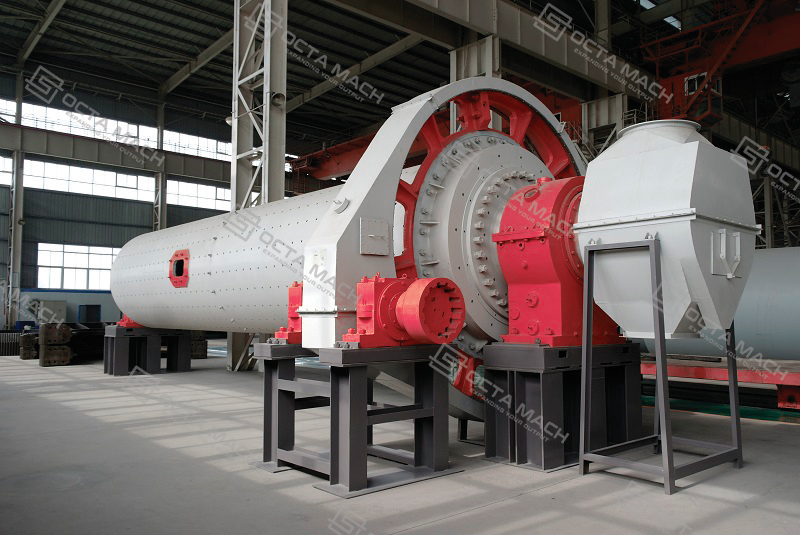
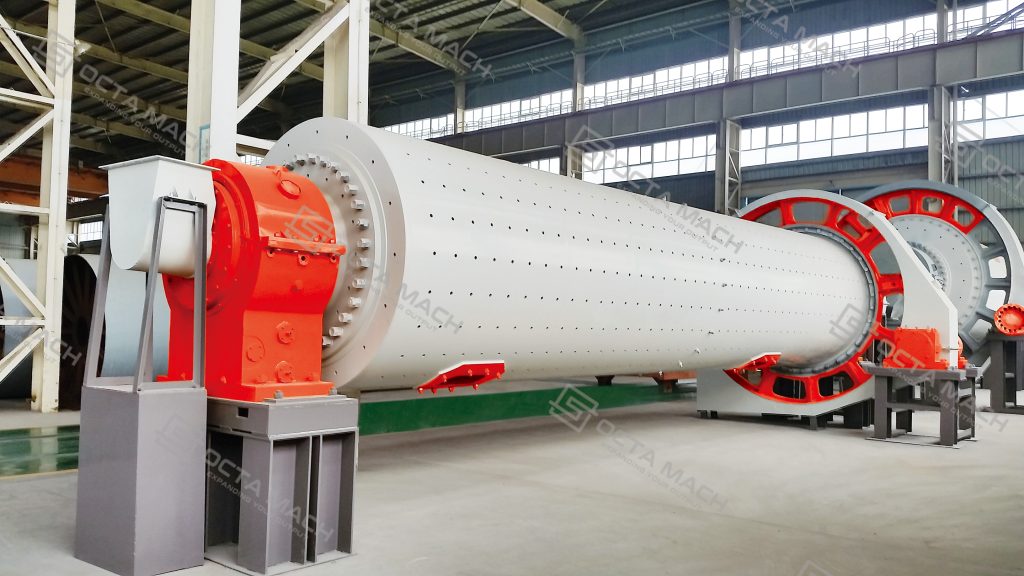
Export Packing and Delivery to Tanzania
International transportation of a ball mill requires controlled support and protection because the shipment includes both large structural assemblies and precision mechanical components.
The Φ1500 × 4500 cylinder, bearing assemblies, drive components and separately packed installation accessories were supported and secured to reduce movement during lifting, loading and international transportation.
Machined surfaces, bearing components, gears, electrical parts and open connections received protection against moisture, dust, corrosion and accidental impact. Smaller components and installation accessories were packed separately and identified according to their functions.
Package identification was particularly important because the equipment included mechanical, transmission, lubrication and connection components that had to be installed in the correct sequence. Clear markings and packing records supported cargo inspection and helped the site team organize the equipment according to the planned erection schedule.
This preparation reduced the risk of components being mixed, damaged or overlooked during unloading. It also allowed the customer to identify the principal assemblies before installation instead of opening every package at the same time.
Ball Mill Installation in Tanzania
Accurate foundation preparation and drive alignment were central to the ball mill installation project in Tanzania. The Φ1500 × 4500 mill required controlled positioning of the cylinder, bearing assemblies, girth gear, pinion and 110 kW drive system. Installation accuracy directly affects bearing loads, gear engagement, vibration and equipment service life.
Before the main equipment was positioned, the foundation dimensions, reference elevation, equipment centerline and anchor-bolt locations were checked against the installation arrangement. The bearing seats had to maintain the required level and relative elevation so that the cylinder load could be distributed correctly.
After the bearing assemblies and cylinder were positioned, the drive system was installed and aligned. The motor, coupling, reducer, pinion and girth gear require a consistent transmission centerline. Misalignment at any of these connections can result in uneven loading, increased vibration and accelerated component wear.
Gear backlash and tooth-contact patterns were also checked during installation. Incorrect engagement between the pinion and girth gear may concentrate the load on a limited section of the tooth surface, causing abnormal noise, elevated temperature and premature wear.
After mechanical alignment was completed, the feeding system, process-water line, overflow-discharge connection, slurry pipeline, lubrication system and hydrocyclone circuit were connected. The site team also checked protective guards, electrical interlocks and emergency-stop devices before trial operation.
Commissioning and Operating Control
The ball mill first underwent a no-load trial to verify the direction of rotation, bearing condition, lubrication performance and drive-system stability. Bearing temperature, vibration, motor current, oil pressure and gear noise were monitored before process material was introduced.
After stable no-load operation, grinding media, process water and gold ore were added progressively. The initial charge was controlled instead of immediately operating with the full specified grinding-media load. Gradual loading allowed the operating team to observe motor load, slurry movement, discharge stability and gear condition.
The mill has a reference processing capacity of 3.5–8 t/h, but this range should not be interpreted as guaranteed site output without representative ore testing and commissioning records. Actual throughput depends on ore hardness, feed-size distribution, target grinding fineness, slurry density and circulating load.
During wet grinding, ore feed and water addition must be adjusted together. If the slurry becomes too dense, material movement and discharge may become unstable. Excessive water can shorten the effective grinding residence time and reduce classification efficiency.
The hydrocyclone separates the mill discharge according to particle size and slurry conditions. Fine overflow proceeds to the gold recovery stage, while coarse underflow returns to the mill. Hydrocyclone feed pressure, slurry density and underflow condition therefore affect both final product fineness and circulating load.
Stable upstream crushing also supports consistent grinding. Large variations in the crusher product can change the mill load and cause fluctuations in motor current, slurry condition and product particle size. Maintaining a consistent feed helps the mill operate closer to its intended grinding condition.
Routine operating control should compare throughput with product particle size, motor current, grinding-media consumption, liner condition and downstream gold recovery. Regular sampling provides the basis for adjusting ore feed, water addition, media loading and hydrocyclone settings.
Supporting Gold Ore Processing in Tanzania
The Φ1500 × 4500 wet overflow ball mill provides the Tanzania project with a dedicated grinding stage between ore crushing and gold recovery. By reducing pre-crushed ore to a nominal discharge-size range of 0.074–0.4 mm, the equipment prepares the material for hydrocyclone classification and subsequent beneficiation.
The closed-circuit configuration returns coarse hydrocyclone underflow to the mill while directing adequately ground slurry to the recovery section. This arrangement improves particle-size control and reduces the risk of coarse, insufficiently liberated material entering the downstream process.
The project also demonstrates the importance of coordinating equipment selection with manufacturing, export packing, installation and commissioning. The reference capacity of 3.5–8 t/h can only be converted into stable operating performance when feed size, slurry density, grinding-media loading and hydrocyclone operation are properly controlled.
Octa Mach supported the project through equipment preparation, export delivery and installation coordination. Clear component identification assisted site assembly, while controlled mechanical alignment and process commissioning established the operating foundation for continuous wet grinding.
FAQ
Q: Why was a wet overflow ball mill selected for this Tanzania gold project?
A: Wet grinding produces a pumpable slurry for hydrocyclone classification and downstream gold recovery. Overflow discharge also provides controlled material residence time for fine grinding.
Q: What is the processing capacity of the supplied gold ore ball mill?
A: The Φ1500 × 4500 ball mill has a reference capacity of 3.5–8 t/h. Actual output depends on ore hardness, feed-size distribution, target fineness, slurry density and circulating load.
Q: How does the hydrocyclone operate with the ball mill?
A: The hydrocyclone sends fine overflow to the gold recovery stage and returns coarse underflow to the ball mill. This closed circuit improves particle-size control and prevents insufficiently ground ore from leaving the grinding section.
Q: What should be checked before loaded operation begins?
A: The site team should check the foundation, bearing alignment, girth-gear contact, drive-system centerline, lubrication system and slurry connections. A stable no-load trial should be completed before grinding media, water and ore are introduced progressively.