
Jaw Crusher is a compression-type primary crushing machine used to reduce large rocks, ores, quarry stone, and construction aggregates before secondary crushing or screening. The machine works through a fixed jaw plate and a moving jaw plate driven by an eccentric shaft. When the moving jaw approaches the fixed jaw, the material is compressed inside the crushing chamber and reduced to a smaller size.
The construction of a jaw crusher mainly includes the frame, fixed jaw, moving jaw, eccentric shaft, flywheel, toggle plate, bearing assembly, adjustment device, and discharge opening. Feed opening, maximum feed size, discharge range, capacity, jaw plate material, motor power, and downstream plant layout should be checked together during equipment selection. As a Rock Jaw Crusher , it is used in quarrying, mining, aggregate production, limestone and granite crushing, construction waste pre-crushing, and mobile crushing plant feed reduction.
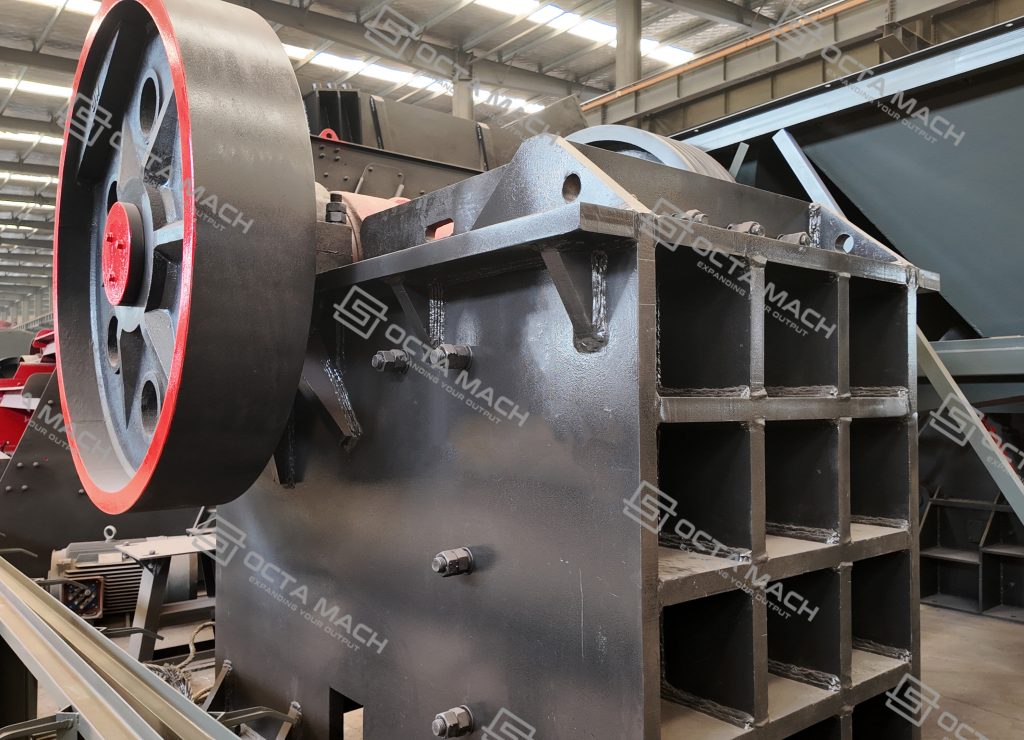
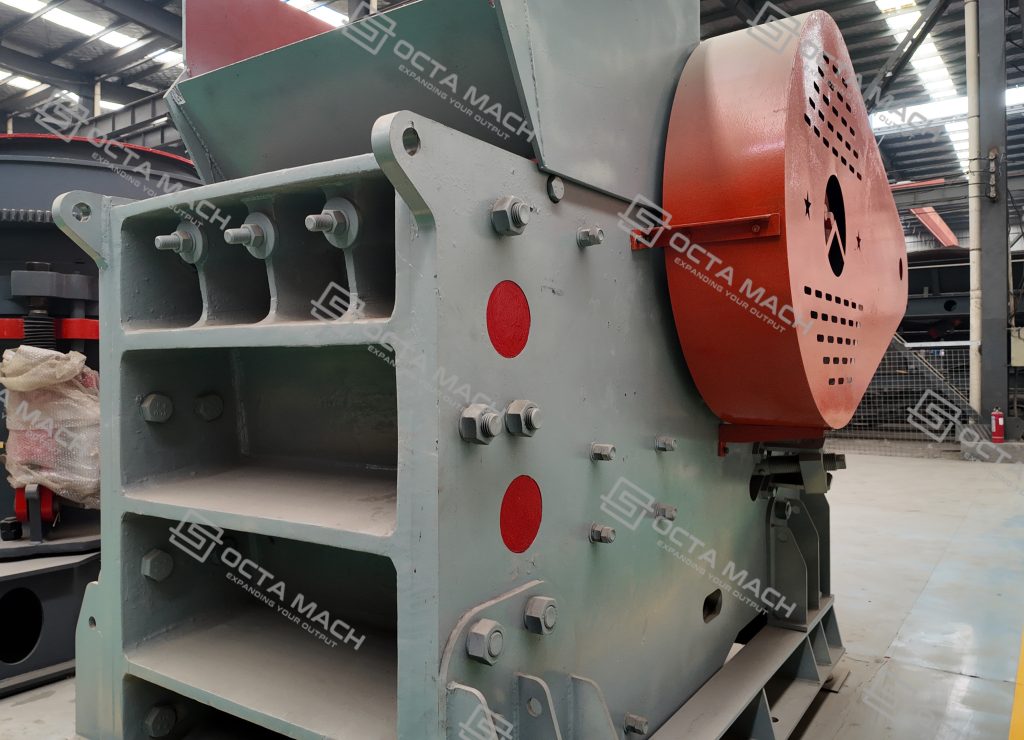
Jaw Crusher Specifications
| Model | Feed Opening Size (mm) | Max Feed Size (mm) | Discharge Size (mm) | Capacity (t/h) | Eccentric Shaft Speed (r/min) | Motor Power (kW) | Weight (t) | Overall Dimension L×W×H (mm) |
|---|---|---|---|---|---|---|---|---|
| PE-150×250 | 150×250 | 125 | 10–40 | 1–3 | 250 | 5.5 | 0.8 | 720×660×850 |
| PE-200×300 | 200×300 | 180 | 15–50 | 2–6 | 260 | 7.5 | 1.2 | 910×750×990 |
| PE-200×350 | 200×350 | 180 | 18–70 | 3–10 | 260 | 11 | 1.5 | 1000×870×990 |
| PE-250×400 | 250×400 | 210 | 20–60 | 5–20 | 300 | 18.5 | 2.8 | 1300×1090×1270 |
| PE-400×600 | 400×600 | 340 | 40–100 | 16–60 | 275 | 30 | 7 | 1730×1730×1630 |
| PE-500×750 | 500×750 | 425 | 50–100 | 40–110 | 275 | 55 | 12 | 1980×2080×1870 |
| PE-600×900 | 600×900 | 500 | 65–160 | 50–180 | 250 | 75 | 17 | 2190×2206×2300 |
| PE-750×1060 | 750×1060 | 630 | 80–140 | 110–320 | 250 | 90 | 29 | 2660×2430×2800 |
| PE-900×1200 | 900×1200 | 750 | 95–165 | 220–450 | 200 | 110 | 52 | 3380×2870×3330 |
| PE-1000×1200 | 1000×1200 | 850 | 195–265 | 315–500 | 200 | 110 | 55 | 3480×2876×3330 |
| PE-1200×1300 | 1200×1300 | 1000 | 180–330 | 400–650 | 220 | 200 | 62 | 4538×2984×3959 |
| PE-1200×1500 | 1200×1500 | 1020 | 150–350 | 400–800 | 180 | 250 | 80 | 4200×3300×3500 |
| PE-1500×1800 | 1500×1800 | 1200 | 220–350 | 450–1000 | 180 | 280 | 122 | 5160×3660×4248 |
| PEX-150×750 | 150×750 | 120 | 18–48 | 8–25 | 320 | 15 | 3.8 | 1200×1530×1060 |
| PEX-250×750 | 250×750 | 210 | 25–60 | 13–35 | 330 | 30 | 5.5 | 1380×1750×1540 |
| PEX-250×1000 | 250×1000 | 210 | 25–60 | 16–52 | 330 | 30 | 7 | 1560×1950×1390 |
| PEX-250×1200 | 250×1200 | 210 | 25–60 | 20–61 | 330 | 37 | 9.7 | 2140×1660×1500 |
| PEX-300×1300 | 300×1300 | 250 | 20–90 | 16–105 | 300 | 55 | 15.6 | 2720×1950×1600 |
| PEX-300×1500 | 300×1500 | 250 | 25–120 | 60–140 | 300 | 75 | 16.5 | 2920×1950×1600 |
| PEX-500×1500 | 500×1500 | 350 | 25–120 | 50–160 | 300 | 90 | 20 | 2360×2660×2105 |
Jaw Crusher Working Principle and Product Advantages
The working principle of a jaw crusher is based on compression crushing. The motor drives the belt and pulley, the eccentric shaft rotates, and the moving jaw plate performs a reciprocating motion. Material entering the crushing chamber is squeezed between the fixed jaw plate and moving jaw plate until it becomes small enough to pass through the discharge opening.
| Working Component | Function | Product Advantage |
|---|---|---|
| Fixed Jaw Plate | Provides the stationary crushing surface | Supports stable compression against large feed material |
| Moving Jaw Plate | Moves toward and away from the fixed jaw | Delivers repeated crushing force |
| Eccentric Shaft | Generates reciprocating motion | Controls crushing stroke and force transmission |
| Toggle Plate | Transfers force and protects the machine under overload | Helps reduce damage to major components |
| Flywheel | Stores rotational energy | Stabilizes operation under uneven feed load |
| Discharge Opening | Controls discharged particle size | Allows adjustment for different product requirements |
| Frame | Supports the crushing chamber and drive system | Maintains structural stability during hard rock crushing |
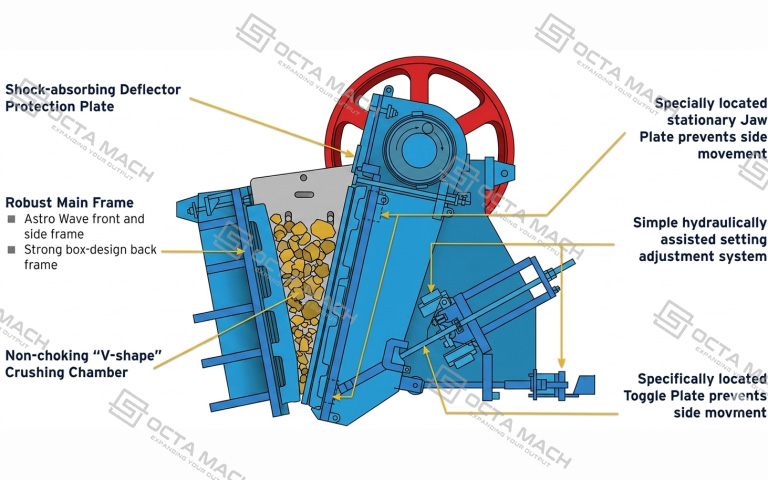
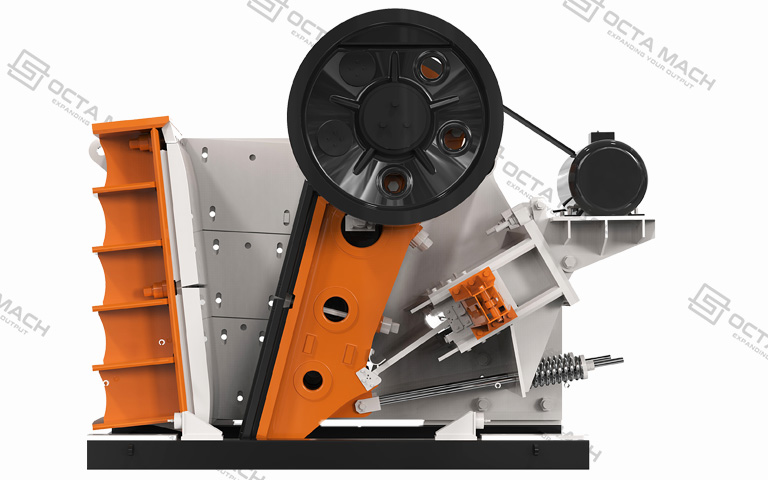
Key advantages include:
- Strong primary crushing capability: suitable for large stone, hard rock, and ore feed.
- Simple mechanical structure: easier inspection and maintenance compared with more complex crushing systems.
- Adjustable discharge size: supports different aggregate, mining, and recycling requirements.
- Durable wear parts: jaw plates can be selected according to material abrasiveness.
- Stable operation: flywheel and eccentric shaft help maintain continuous crushing rhythm.
- Flexible plant matching: can work with vibrating feeder, cone crusher, impact crusher, vibrating screen, belt conveyor, and mobile crushing station.
For a crusher jaw crusher configuration in a complete crushing plant, the jaw crusher normally acts as the first crushing stage and determines whether the downstream process can run smoothly.
Types of Jaw Crushers
Different jaw crusher types are selected according to feed size, crushing stage, mobility requirement, and final product size.
| Jaw Crusher Type | Main Use | Typical Position in Plant |
|---|---|---|
| PE Jaw Crusher | Coarse crushing of large rocks and ores | Primary crushing stage |
| PEX Jaw Crusher | Finer crushing after primary reduction | Secondary or fine crushing stage |
| Stationary Jaw Crusher | Continuous production in fixed plants | Quarry, mining, aggregate, and stone crushing lines |
| Mobile Jaw Crusher | On-site and flexible crushing | Mobile crushing plant, road project, temporary quarry operation |
| Rock Jaw Crusher | Hard rock and ore crushing | Granite, basalt, iron ore, copper ore, and other tough materials |
| Stone Jaw Crusher | General stone and aggregate processing | Limestone, river pebble, construction aggregate, and sand-gravel production |
PE jaw crusher is normally used when the project requires larger feed opening and coarse output. PEX jaw crusher is more suitable when the feed has already been reduced and a smaller discharge size is required. Mobile jaw crusher is selected when the site changes frequently or when the crushing plant must be moved closer to the raw material.
How to Choose the Right Jaw Crusher
Choosing the right jaw crusher depends on the feed size, material hardness, required discharge size, target capacity, and the equipment arranged after the primary crushing stage. The selected model should match the whole crushing circuit, not just a single rated capacity.
| Selection Factor | What to Check | Why It Matters |
|---|---|---|
| Feed Size | Maximum lump size, average feed size, and feed opening | Prevents chamber blockage and unstable feeding |
| Required Capacity | Target t/h output and working hours | Keeps the jaw crusher matched with feeder, conveyor, and screen capacity |
| Material Hardness | Limestone, granite, basalt, ore, or concrete | Hard materials require stronger structure and suitable wear parts |
| Abrasion Level | Silica content and wear behavior | Affects jaw plate material and replacement cycle |
| Discharge Size | Required output size and CSS range | Determines whether secondary crushing or screening can work properly |
| Moisture and Clay Content | Sticky material, mud, or high moisture | May affect feeding stability and discharge efficiency |
| Plant Layout | Stationary or mobile plant, feeding height, discharge direction | Influences installation, maintenance access, and material flow |
| Downstream Equipment | Cone crusher, impact crusher, screen, or conveyor | Ensures the jaw crusher output fits the next processing stage |
For hard rock plants, the jaw crusher is commonly followed by a cone crusher and vibrating screen. For limestone or construction aggregate, it may be followed by an impact crusher. For mobile crushing plants, feeding method, transport size, discharge conveyor height, and maintenance access should also be reviewed before model selection.
Working Conditions and Applications
Jaw crushers are used where the incoming material is too large for direct secondary crushing, screening, or conveying. They are commonly placed at the front of quarry, mining, aggregate, and recycling plants to handle large feed and provide stable primary size reduction.
Typical application conditions include:
- Quarry primary crushing: handles blasted granite, basalt, limestone, and other large quarry stone before cone or impact crushing.
- Mining ore reduction: reduces iron ore, copper ore, gold ore, and other hard materials before grinding or beneficiation.
- Aggregate front-end crushing: prepares stone feed for screening, shaping, and concrete or road aggregate production.
- Construction waste pre-crushing: breaks concrete blocks, demolition waste, and mixed construction material before impact crushing or screening.
- Mobile crushing projects: used in crawler or tire-mounted plants where site movement, feeding space, and quick setup are important.
Why Choose Octa Mach Jaw Crusher
Octa Mach supplies jaw crushers for quarry, mining, aggregate, construction material, and mobile crushing projects, with model selection matched to feed size, material hardness, target capacity, discharge requirement, and downstream equipment. Each jaw crusher can be coordinated with feeders, conveyors, cone crushers, impact crushers, and screens, while key parts such as jaw plates, toggle plates, bearings, and liners are supported for maintenance. Machines are prepared with proper marking, packing, spare parts, inspection records, and technical documents for overseas delivery and site installation.
FAQ
Q1:How should the feed size of a jaw crusher be selected?
A1:The feed size should be smaller than the usable feed opening and suitable for the chamber depth, not only the listed maximum value. For blasted quarry stone or mine ore, oversized lumps should be controlled by a vibrating feeder or grizzly screen to prevent chamber blockage and unstable crushing.
Q2:What affects jaw crusher capacity in actual operation?
A2:Actual jaw crusher capacity depends on feed gradation, material hardness, moisture and clay content, CSS setting, jaw plate wear, feeder stability, and downstream conveyor or screen capacity. The rated capacity should be checked together with the complete crushing circuit.
Q3:What is the difference between PE jaw crusher and PEX jaw crusher?
A3:PE jaw crusher is normally used for primary or coarse crushing with larger feed size and higher front-end reduction duty. PEX jaw crusher is used for finer crushing after the material has already been reduced, often before screening or secondary size control.
Q4:When should jaw plates be replaced?
A4:Jaw plates should be replaced when the wear profile reduces crushing efficiency, causes uneven discharge size, weakens the gripping angle, or increases vibration and power load. Replacement timing should be judged by wear pattern, output size stability, and operating hours, not by a fixed calendar interval alone.