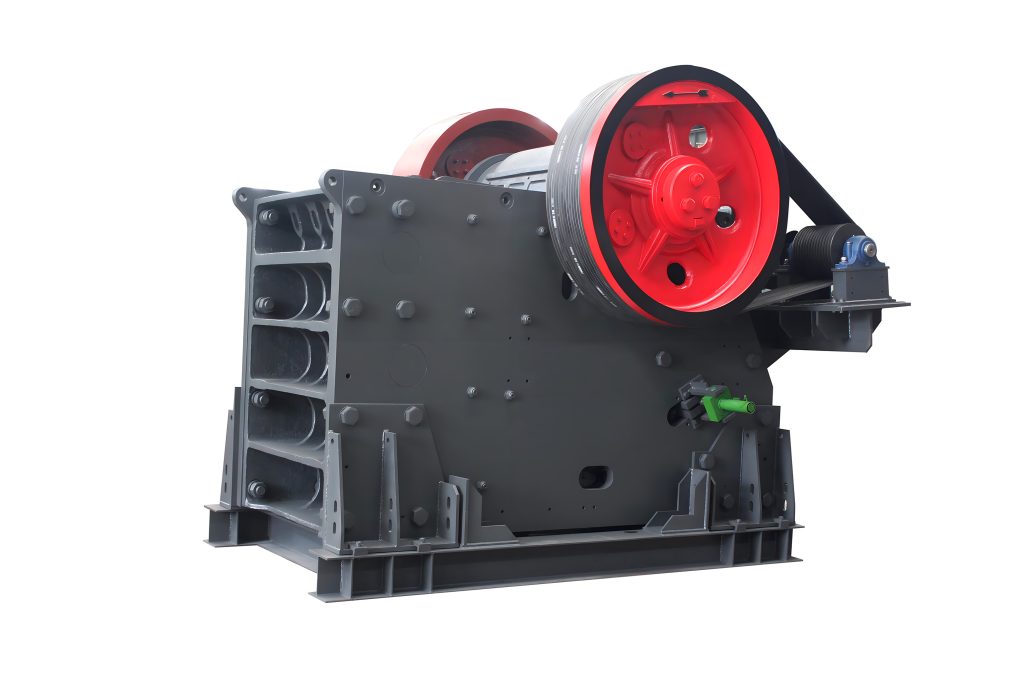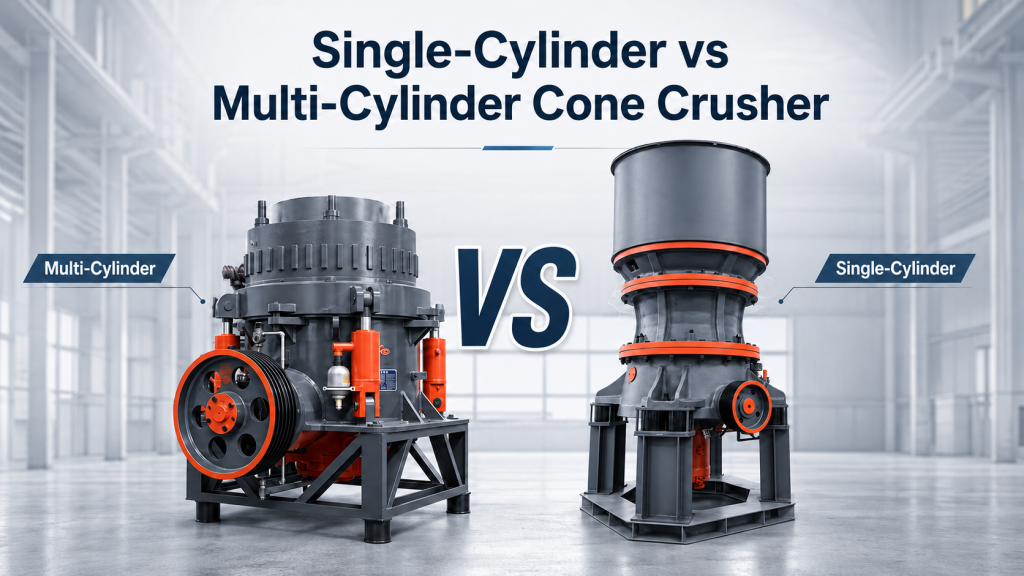
Jaw crusher jaw plates use different tooth shapes to grip and break rock under compression. The height, spacing, and surface geometry of the teeth influence material movement, crushing efficiency, wear resistance, and discharge size.
Sharp teeth generally provide stronger grip on smooth or slab-shaped rocks, while broader teeth offer more wear material for abrasive applications. Widely spaced grooves can also help smaller particles move through the crushing chamber.
Selecting the correct tooth profile requires consideration of rock abrasiveness, feed size, fines content, and closed side setting (CSS). The thickest or most aggressive jaw plate is not necessarily the most suitable option.
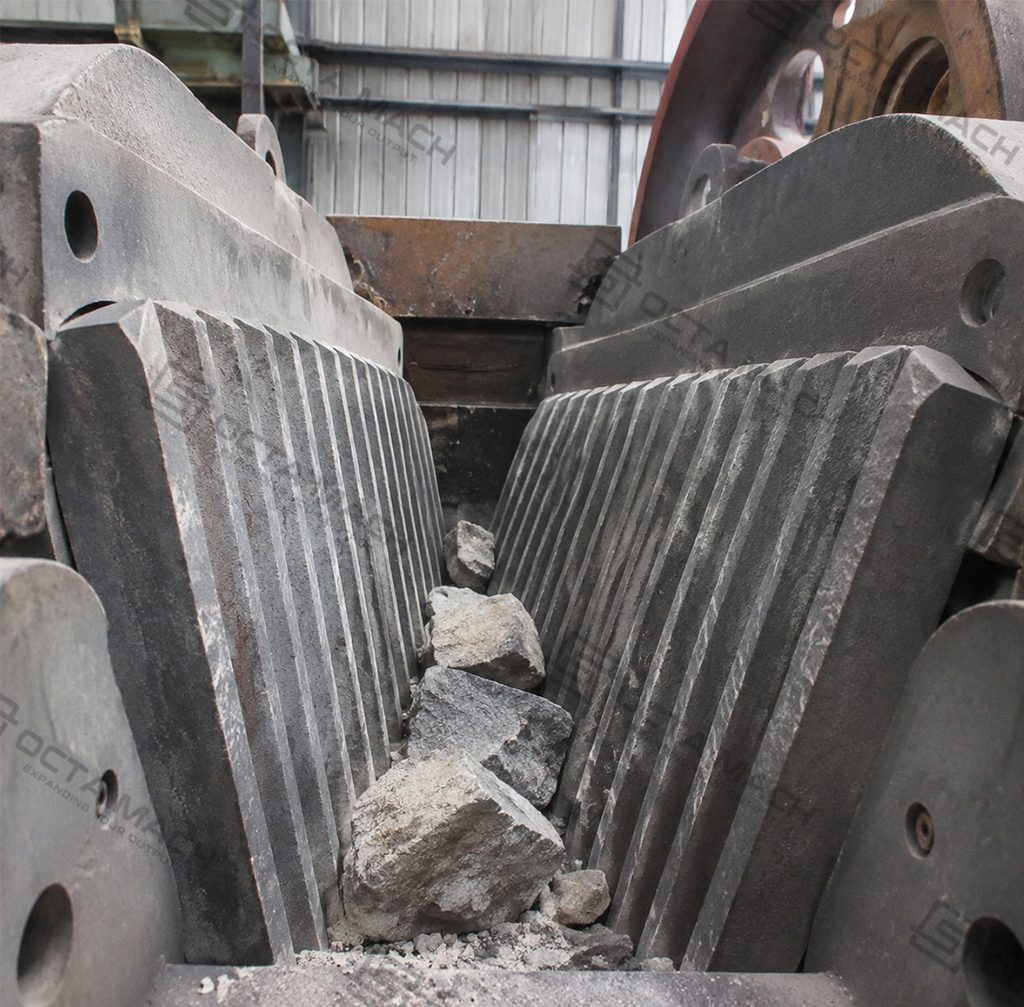
How Jaw Plate Tooth Profiles Affect Crushing
The tooth profile determines how rock contacts the fixed and moving jaws during each crushing stroke. As the moving jaw approaches the fixed jaw, compressive force develops at the contact points and fractures the material.
Three geometric features influence this process:
- Tooth Height: Taller teeth can improve grip on smooth or irregular rocks, but exposed peaks may wear faster under abrasive conditions.
- Tooth Spacing: Narrow spacing creates more contact points, while wider grooves provide additional clearance for fines and fractured particles.
- Tooth Shape: Sharp teeth concentrate initial contact pressure, whereas broad or rounded teeth distribute the load over a larger surface.
These characteristics also affect the chamber’s behavior as the jaw plates wear. A profile that provides effective grip when new may gradually become flatter, changing how material moves toward the discharge opening.
Common Jaw Crusher Tooth Types
Several jaw crusher tooth types are available for quarrying, mining, and construction material recycling. Although individual manufacturers use different designations, most profiles can be classified by tooth geometry and intended operating conditions.
Standard Tooth
Standard tooth plates have moderate tooth height and relatively regular spacing. They are commonly considered for softer or less abrasive materials where extreme gripping or wear resistance is not required.
The balanced geometry provides multiple contact points without excessively deep grooves. However, standard profiles may lose their advantage when processing highly abrasive rock or material containing a substantial proportion of fines.
Quarry Tooth
Quarry tooth profiles use broad contact surfaces and substantial wear sections to withstand repeated compression against abrasive rock.
They are often considered for granite, basalt, and other hard quarry materials. The additional wear material can extend usable plate life, provided that the profile matches the feed and crusher configuration.
Flatter tooth geometry may reduce the available space for fines and can contribute to elongated discharge particles under some conditions.
Sharp and Gripping Tooth Profiles
Sharp and gripping tooth profiles use pronounced ridges to improve contact with rounded, smooth, or slab-shaped feed material. Their geometry helps prevent rocks from sliding along the crushing surfaces during compression, particularly when the feed contains particles with limited natural gripping points.
The main consideration is tooth-peak wear. Under highly abrasive conditions, exposed ridges can gradually become rounded, reducing their initial gripping advantage. The selection should therefore balance material engagement with the expected wear rate.
Corrugated and Coarse Corrugated Tooth
Corrugated plates have repeating ridges that provide multiple rock-contact points along the crushing chamber.
Conventional corrugated profiles are used in selected applications where controlled gripping and discharge settings are important.
Coarse corrugated plates have wider spacing and deeper grooves. These features can provide additional clearance for fines, reducing unnecessary compression of particles that are already small enough to pass through the chamber.
Coarse corrugated designs are commonly considered for abrasive feed, larger CSS settings, or material containing a significant proportion of smaller particles.
Heavy Duty Tooth
Heavy duty profiles use thicker wear sections and robust tooth geometry for demanding crushing conditions.They are generally selected when abrasion, contact loads, and liner service life are major operating concerns.
Some heavy duty designs are intended for the fixed jaw and can be combined with a different moving jaw profile. The additional plate thickness must remain compatible with the machine’s feed opening and permitted CSS range.
Jaw Plate Tooth Profile Comparison
| Tooth Profile | Geometry | Main Application Consideration | Potential Limitation |
|---|---|---|---|
| Standard Tooth | Moderate tooth height and spacing | General crushing duties | May offer limited gripping in difficult feed |
| Quarry Tooth | Broad teeth and substantial wear sections | Abrasive quarry materials | Fines clearance and particle shape |
| Sharp Tooth | Pronounced tooth peaks | Rounded and slab-shaped feed | Tooth-peak wear |
| Corrugated | Regular ridged surface | Applications requiring controlled material engagement | Performance depends on feed gradation |
| Coarse Corrugated | Wider grooves and tooth spacing | Feed containing significant fines | Must match chamber geometry |
| Heavy Duty | Thick wear sections | Demanding crushing conditions | Plate thickness and chamber compatibility |
These descriptions are general selection guidelines. Actual tooth geometry and recommended applications vary between crusher models.
Fixed and Moving Jaw Plate Profiles
The fixed jaw provides the stationary crushing surface, while the moving jaw compresses material against it.These two positions experience different contact conditions and do not always require identical tooth profiles.
The fixed and moving jaw plates form a combined crushing surface, so their tooth geometry should be evaluated as a pair rather than as two independent components
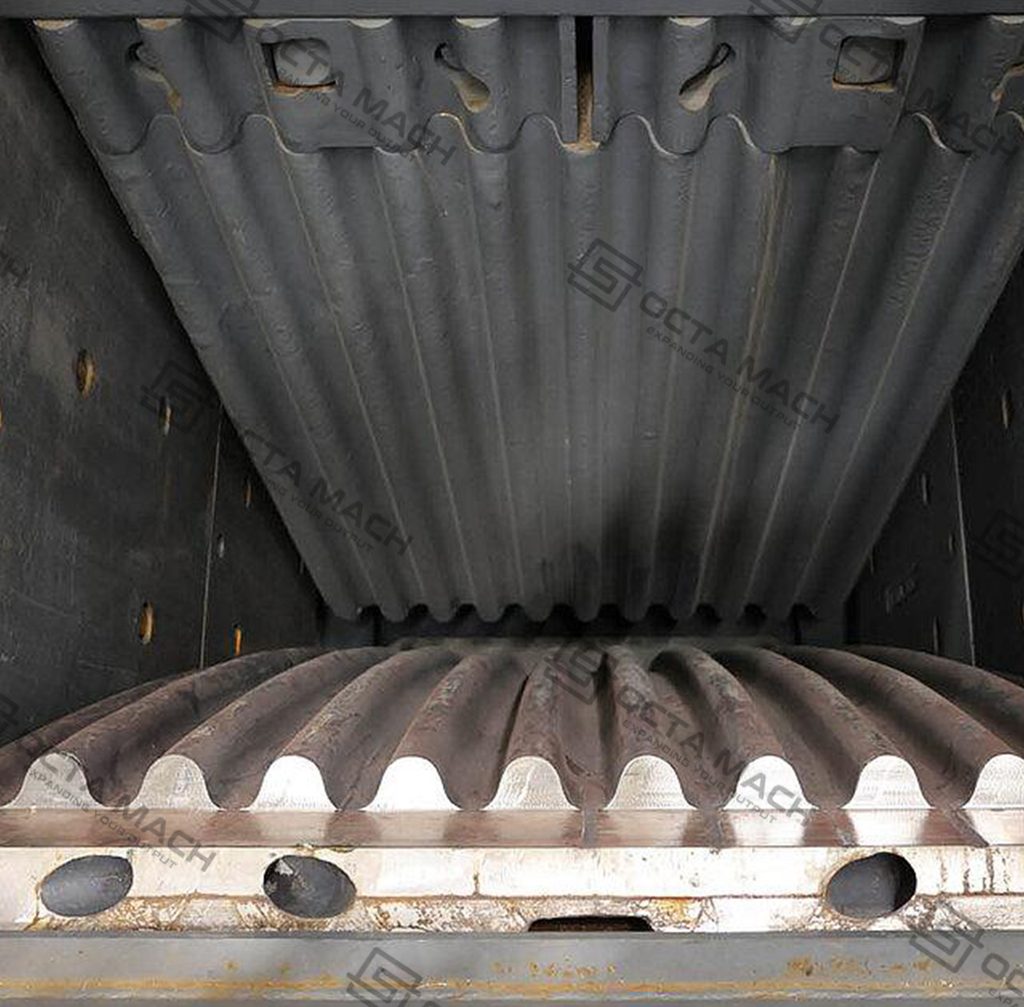
Some crushing chambers use a heavy duty fixed plate combined with a corrugated or more aggressive moving plate. This arrangement can provide additional wear material on one side while maintaining effective gripping geometry on the other.
However, the profiles must be designed to work together.Changes in tooth height, plate thickness, or mounting geometry can affect the feed opening, crushing chamber shape, and achievable CSS.
Replacement plates should match the crusher’s seating surfaces, locking arrangement, and dimensional requirements. Poorly fitted plates can move under load and damage the supporting jaw structure.
Choosing Jaw Plates for Different Applications
Jaw plate selection depends on more than the type of rock being processed. Feed gradation, particle shape, abrasiveness, moisture, and crusher settings all influence how a particular tooth profile performs.
A suitable profile must provide sufficient gripping action while allowing material to move through the crushing chamber without unnecessary compression. The relationship between tooth geometry, feed characteristics, and closed side setting (CSS) should therefore be evaluated together.
Key Factors Affecting Jaw Plate Selection
Several operating conditions should be checked before selecting a replacement jaw plate. Two crushers processing the same rock may require different profiles because their feed distribution, chamber configuration, and discharge requirements are not necessarily identical.
| Selection Factor | What to Evaluate | Effect on Tooth Profile Selection |
|---|---|---|
| Rock Abrasiveness | Mineral composition and wear characteristics | Influences the required wear resistance |
| Feed Gradation | Proportion of coarse and fine particles | Affects tooth spacing and groove geometry |
| Particle Shape | Rounded, flaky, or slab-shaped material | Influences gripping requirements |
| Moisture and Clay | Water and sticky material content | Affects material flow and potential chamber packing |
| CSS | Required discharge opening | Influences chamber configuration and product size |
| Crusher Model | Chamber dimensions and mounting design | Determines plate compatibility |
The Effect of Fines Content on Jaw Plate Selection
The proportion of fine particles in the feed can significantly influence how material moves through a jaw crusher. When particles smaller than the required discharge size enter the crushing chamber, they may undergo unnecessary compression if they cannot pass through the available spaces between the jaw plates.
Tooth spacing and groove geometry therefore become important selection factors. Coarse corrugated profiles provide wider grooves that can offer additional clearance for smaller particles, although the actual benefit depends on feed gradation and chamber design.
Prescreening should also be considered. Removing suitable fines before primary crushing can reduce unnecessary loading inside the chamber and improve the use of the available crushing capacity.
Granite and Basalt
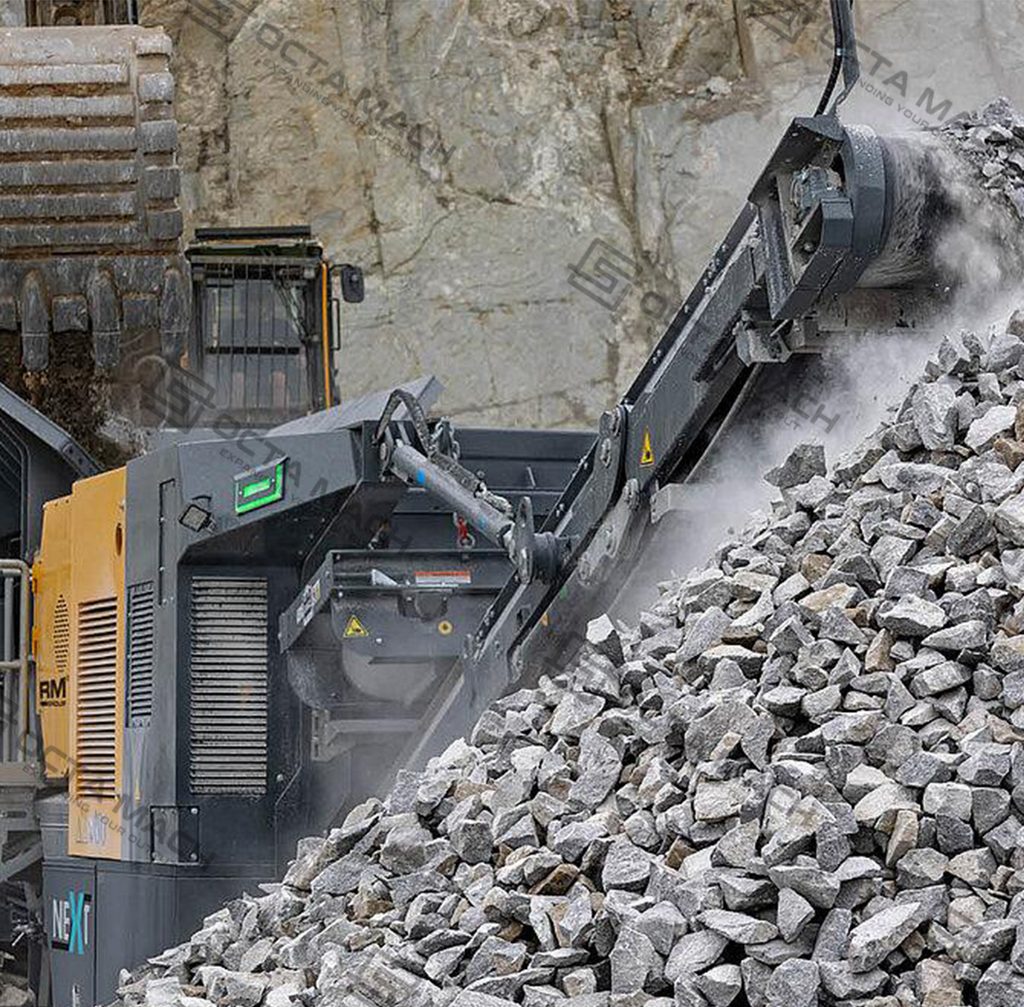
Granite and basalt are hard, potentially abrasive materials commonly processed in primary jaw crushers. Quarry and heavy-duty tooth profiles are often considered for coarse feed because they provide substantial wear material.
When the feed contains significant fines, coarse corrugated profiles may offer better material clearance through wider grooves. Tooth profile selection should also consider feed gradation, rock abrasiveness, and the required CSS to maintain effective crushing performance.
Limestone
Limestone is generally easier to crush than highly abrasive siliceous rock, although its characteristics vary between deposits.
Standard or corrugated profiles can be suitable for relatively uniform limestone feed. When clay, moisture, or excessive fines are present, material accumulation between the teeth becomes an additional concern.
Effective prescreening and appropriate tooth spacing can help maintain chamber performance.
River Gravel
Smooth, rounded gravel can slip against relatively flat jaw surfaces.Sharp or pronounced tooth profiles may improve grip and reduce material movement during compression. However, quartz-rich river gravel can be abrasive, so tooth durability must be considered alongside gripping performance.
Recycled Concrete
Recycled concrete often contains irregular fragments, flat sections, and materials with different strengths.
Pronounced or multi-tooth profiles may help grip flat concrete pieces, while sufficiently robust wear sections accommodate changing contact loads.
Steel reinforcement and unsuitable feed must be controlled separately. Tooth design cannot replace appropriate material preparation.
Jaw Plate Selection Guide
| Feed Material | Profile to Consider | Main Selection Factor |
|---|---|---|
| Granite | Quarry / Heavy Duty / Coarse Corrugated | Abrasion and fines content |
| Basalt | Quarry / Heavy Duty | Wear rate and particle shape |
| Limestone | Standard / Corrugated | Feed gradation and moisture |
| River Gravel | Sharp / Super Tooth | Grip and mineral abrasiveness |
| Recycled Concrete | Multi-Tooth / Gripping Profile | Flat fragments and variable feed |
Final selection must account for the actual jaw crusher model, chamber dimensions, and operating requirements.
How Tooth Wear Affects Crushing Performance
Jaw crusher wear parts gradually lose material as rock passes through the chamber. Tooth peaks become rounded, grooves become shallower, and the original crushing surface changes.The consequences extend beyond the replacement cost of the jaw plates.
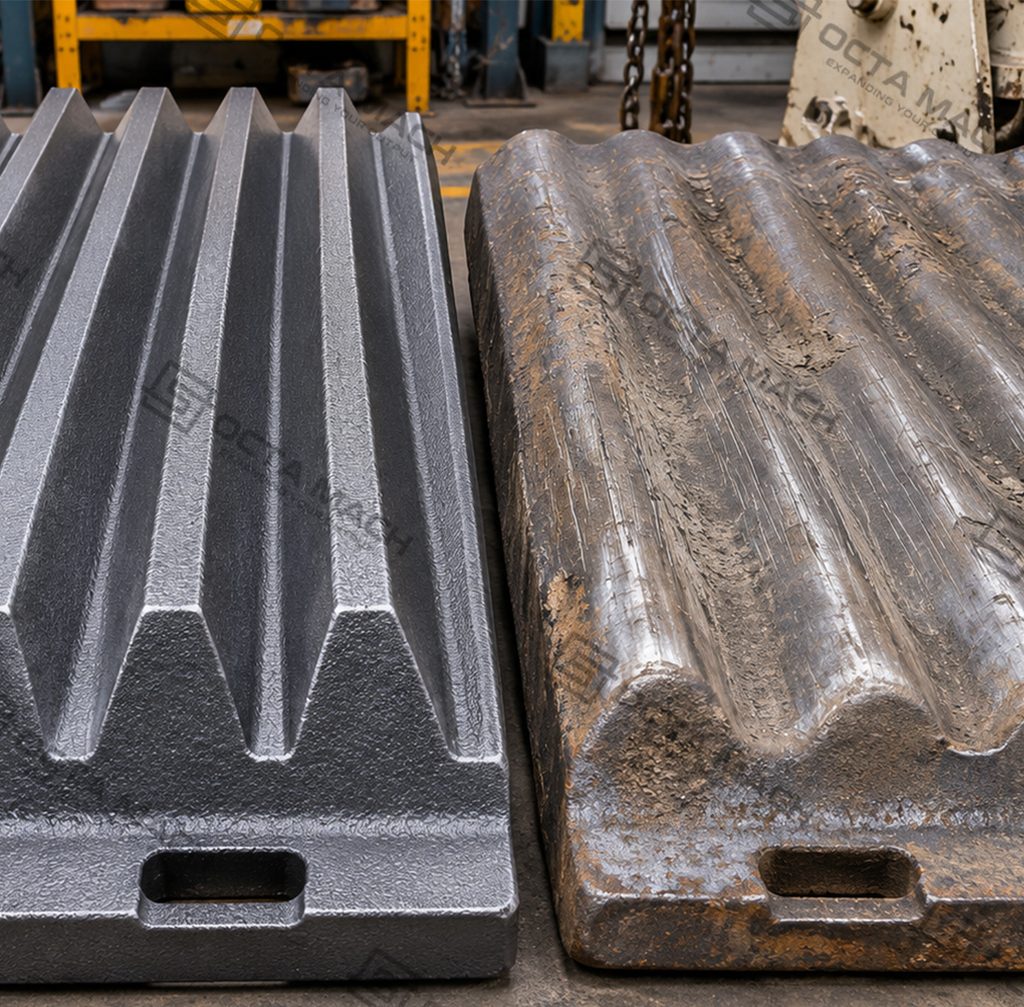
Reduced Grip: Worn tooth peaks may allow smooth or flat rocks to slip instead of breaking efficiently during compression.
Uneven Chamber Wear: Wear often varies along the plate height. Localized wear can change the chamber shape, restrict material movement, or produce inconsistent discharge.
CSS Changes: As the liner surface wears, the effective discharge opening may increase even when the mechanical adjustment remains unchanged. The actual CSS should be checked using the procedure specified for the crusher model.
Product Shape: Worn or unsuitable profiles can contribute to excessive flat or elongated fragments, potentially affecting secondary crushing and screening.
Inspecting Jaw Plate Wear Before Replacement
Jaw plate wear should be evaluated by examining the remaining tooth height, groove depth, wear distribution, and structural condition of the liner. A plate may still retain considerable material in some areas while developing severe localized wear elsewhere, which can affect the crushing chamber geometry.
Inspection should also cover cracks, broken tooth sections, damaged seating surfaces, and loose or deteriorated mounting components. These conditions can indicate that replacement is necessary even when the overall plate thickness has not reached its minimum limit.
The actual CSS should be verified using the measurement procedure specified for the crusher model. Replacement timing should follow the manufacturer’s permitted wear limits rather than relying on operating hours alone.
Jaw Plate Materials and Manufacturing
Tooth geometry controls rock engagement, but material composition and heat treatment strongly influence durability.A qualified jaw plate manufacturer must maintain both accurate casting geometry and appropriate material properties.
High-Manganese Steel
Austenitic manganese steel is widely used for jaw crusher liners because of its impact toughness and ability to work-harden under repeated loading.
Common nominal manganese-content categories include approximately 13%, 18%, and 22%.
| Material Designation | Approximate Mn Content | Technical Consideration |
|---|---|---|
| Mn13 | 13% | Common manganese steel category for impact and wear applications |
| Mn18 | 18% | Alternative composition for selected crushing conditions |
| Mn22 | 22% | Higher manganese content for selected wear applications |
These designations indicate nominal manganese-content categories and should not be treated as complete material specifications. Carbon content, other alloying elements, heat treatment, and the resulting microstructure must also be considered when evaluating jaw plate performance.
Actual chemical composition and acceptance requirements should be verified against the applicable material specification and mill or foundry test documentation.
Casting, Heat Treatment, and Inspection
Jaw plates are commonly produced by casting the required tooth geometry, followed by heat treatment, finishing, and inspection.
Solution treatment and controlled cooling are particularly important for obtaining the intended austenitic manganese steel microstructure.
Quality verification should include:
- Chemical composition and heat identification.
- Tooth geometry and overall casting dimensions.
- Seating surfaces, mounting holes, and locking features.
- Surface condition and relevant casting defects.
- Heat treatment and applicable inspection records.
Inspection methods and acceptance criteria must follow the agreed material specification and manufacturing requirements. Universal dimensional tolerances cannot be applied to every jaw plate design.
Selecting a Jaw Plate Supplier
A suitable jaw plate supplier should confirm more than the crusher model or the outside dimensions of a replacement plate. Tooth height, groove spacing, wear thickness, alloy composition, and mounting geometry can all affect compatibility and crushing performance.
Before ordering replacement plates, the fixed or moving jaw position, existing plate dimensions, crusher model, and operating material should be reviewed together. Material traceability and inspection documentation are also important for verifying the quality of cast manganese steel components.
When evaluating jaw crusher plates for sale, purchase price should be considered alongside expected service life, crushing performance, replacement downtime, and equipment compatibility.
Octa Mach supports inquiries for replacement jaw plates and related crusher wear components. Available tooth profiles, material grades, and supply arrangements can be reviewed against the crusher model and actual crushing conditions.
FAQ
Q: How do you choose the right jaw plate tooth profile for different rock types?
A: Jaw plate selection depends on rock hardness, abrasiveness, feed size, particle shape, and fines content. Quarry and heavy-duty profiles are commonly considered for abrasive granite and basalt, while sharp or corrugated profiles may improve gripping of rounded gravel and fractured material. The final selection should also account for CSS, chamber geometry, and the required product size.
Q: Are coarse corrugated jaw plates suitable for feed with high fines content?
A: Yes. Coarse corrugated jaw plates feature wider grooves that provide more space for smaller particles to move through the crushing chamber. This can reduce unnecessary compression of material that is already close to the required discharge size. Their suitability depends on feed gradation, CSS, and the crusher’s chamber design.
Q: Can fixed and moving jaw plates use different tooth profiles?
A: Yes. Some jaw crusher configurations allow different tooth profiles on the fixed and moving jaw plates to balance gripping performance and wear resistance. For example, a heavy-duty fixed jaw may be paired with a corrugated moving jaw when the crusher design permits this combination. Both plates must maintain compatible thickness, tooth geometry, and mounting dimensions to ensure proper chamber operation.
Q: When should jaw crusher jaw plates be replaced?
A: Jaw plates should be replaced when tooth wear reaches the manufacturer’s permitted limit, cracks develop, or uneven wear begins affecting crushing performance. Excessive tooth-height loss can reduce gripping ability, while liner wear may change the effective CSS and increase product size. Regular inspection of remaining plate thickness, tooth condition, mounting areas, and discharge settings helps determine the appropriate replacement interval.