
Jaw crusher plates form the two opposing crushing surfaces inside the crushing chamber. The fixed jaw plate remains attached to the crusher frame, while the swing jaw plate moves with the eccentric drive and compresses incoming rock against the fixed plate. Repeated compression fractures the material, and the crushed particles move downward through the chamber until they can pass through the discharge opening.
The geometry and condition of these plates affect how material enters the chamber, how effectively it is gripped, and how evenly the working surfaces wear. Tooth profile, plate thickness, manganese steel grade and mounting dimensions all need to match the crusher model and operating conditions.
Octa Mach supplies high manganese steel jaw crusher plates, also commonly referred to as jaw crusher jaw plates, for PE series jaw crushers. Available material grades include Mn13, Mn18 and Mn22, with Mn18Cr2 also listed for fixed jaw plates. Configurations include corrugated and coarse corrugated profiles, with one-piece or segmented construction depending on the component design.
Jaw Crusher Plate Specifications
Octa Mach supplies fixed and swing jaw plates in high manganese steel for PE series jaw crushers. Available materials include Mn13, Mn18 and Mn22, with Mn18Cr2 also listed for selected fixed jaw plates. Different tooth profiles and mounting structures are available according to the crusher model and component design.
The fixed and swing plates have different dimensions, working surfaces and seating arrangements. Their specifications depend on the original crusher configuration, including tooth geometry, plate thickness and mounting interfaces.
| Specification | Fixed Jaw Plate | Swing Jaw Plate |
|---|---|---|
| Material Type | High Manganese Steel | High Manganese Steel |
| Material Grades | Mn13, Mn18, Mn22, Mn18Cr2 | Mn13, Mn18, Mn22 |
| Reference Dimensions (L × W × T) | 1680 × 1040 × 145 mm | 1890 × 1040 × 145 mm |
| Reference Weight | 1,250 kg | 1,420 kg |
| Tooth Profile | Corrugated / Coarse Corrugated | Corrugated / Coarse Corrugated |
| Tooth Count and Pitch | According to model and profile drawing | According to model and profile drawing |
| Construction | One-piece / Segmented | One-piece / Segmented |
| Mounting Arrangement | Model-specific seating and retention | Model-specific seating and retention |
Reference PE Jaw Crusher Models: PE-400×600, PE-500×750, PE-600×900, PE-750×1060 and PE-900×1200.
The dimensions and weights shown above are reference specifications for individual product configurations, not standard values for every PE model. Replacement plates should match the original tooth profile, rear seating geometry and fixing dimensions. The crusher model, part number or existing component drawing can be used to confirm the correct configuration.
Fixed Jaw Plate and Swing Jaw Plate
The fixed jaw plate provides a stationary crushing surface, while the swing jaw plate moves toward and away from it to compress the feed material. Both are exposed to impact and abrasion, but their different mounting positions and loading conditions affect how wear develops across the working surfaces.
Fixed Jaw Plate
The fixed jaw plate is installed against the stationary frame of the crusher. Its working surface faces the moving jaw and receives repeated compression as rock is forced into the crushing chamber.
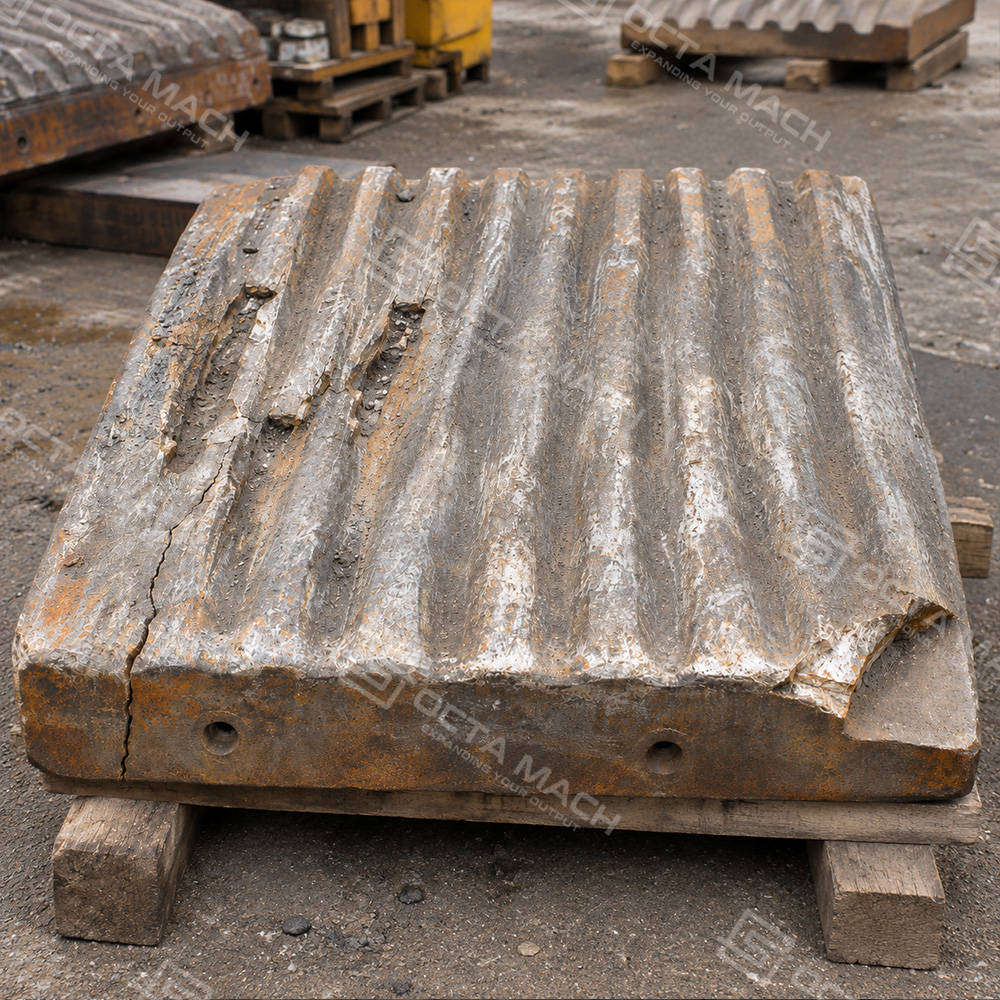
The plate also experiences abrasive contact as crushed material moves downward along its teeth. Wear gradually reduces tooth height and changes the surface geometry. When the teeth become excessively flattened, the plate may lose some of its ability to grip incoming material.
The fixed jaw plate must fit the supporting frame correctly. Its overall dimensions, seating surface, thickness and retaining arrangement determine whether the replacement component can be installed securely.
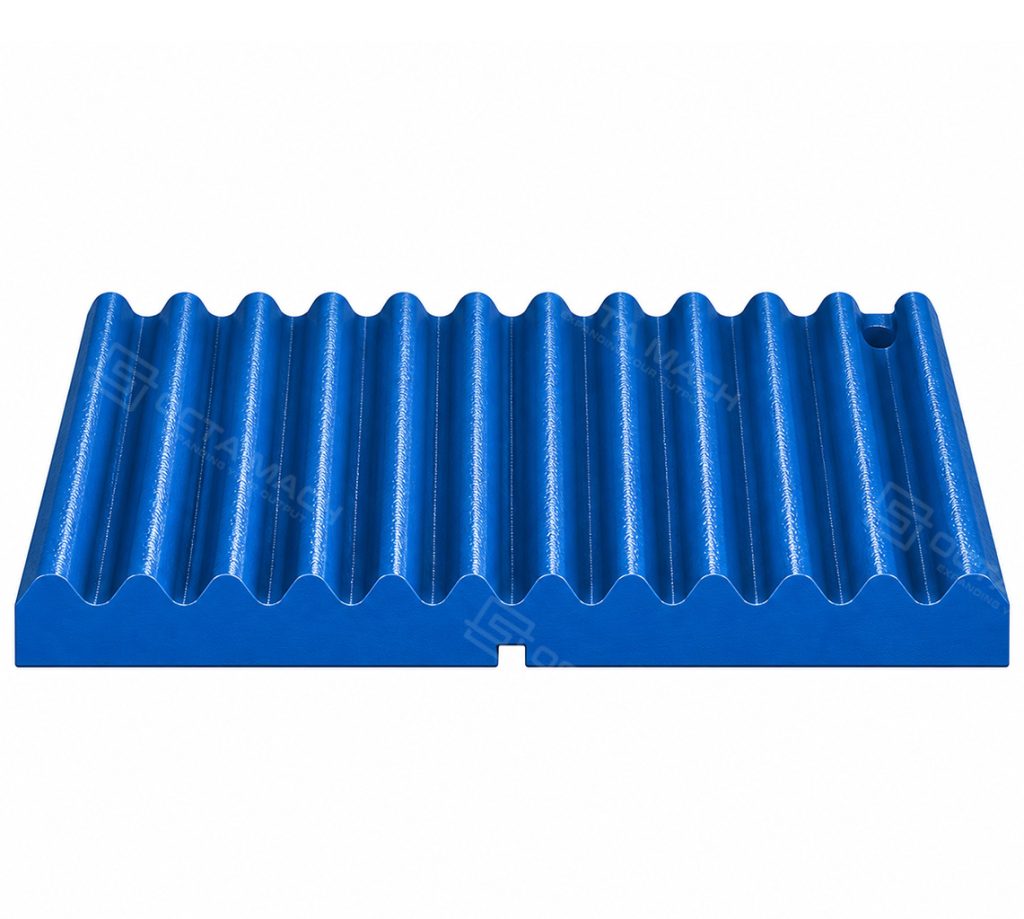
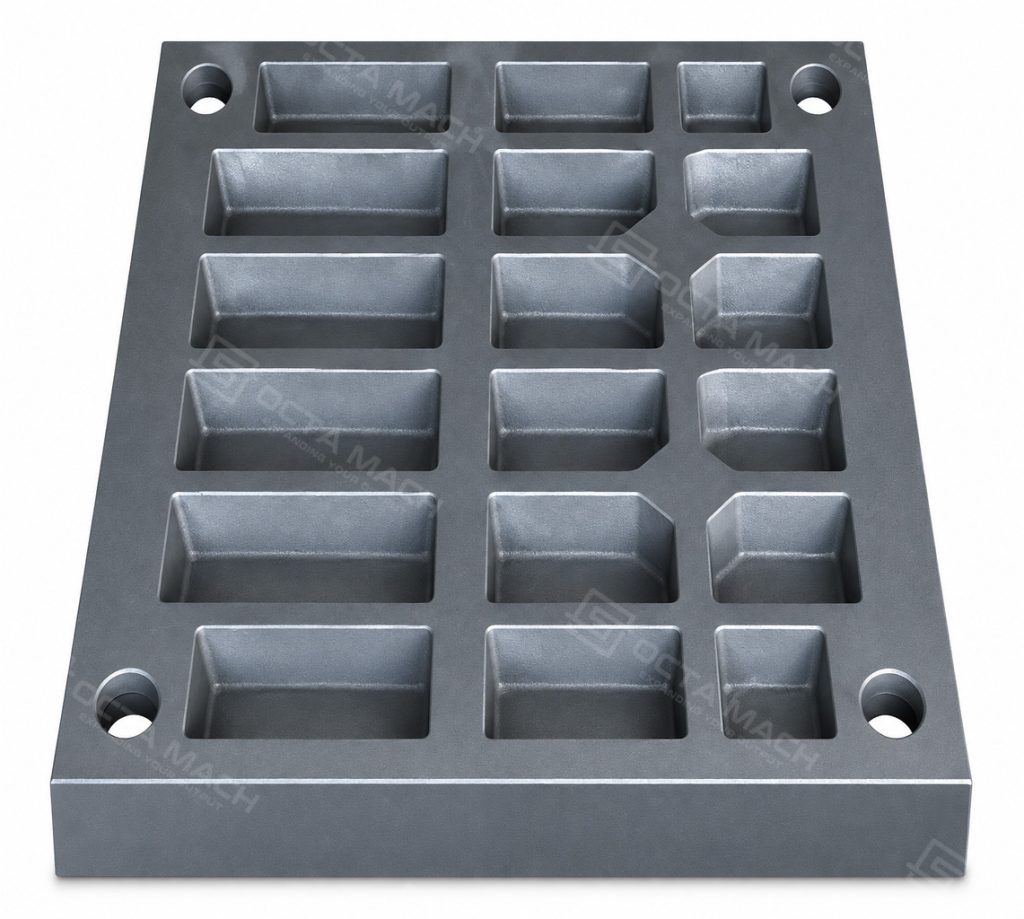
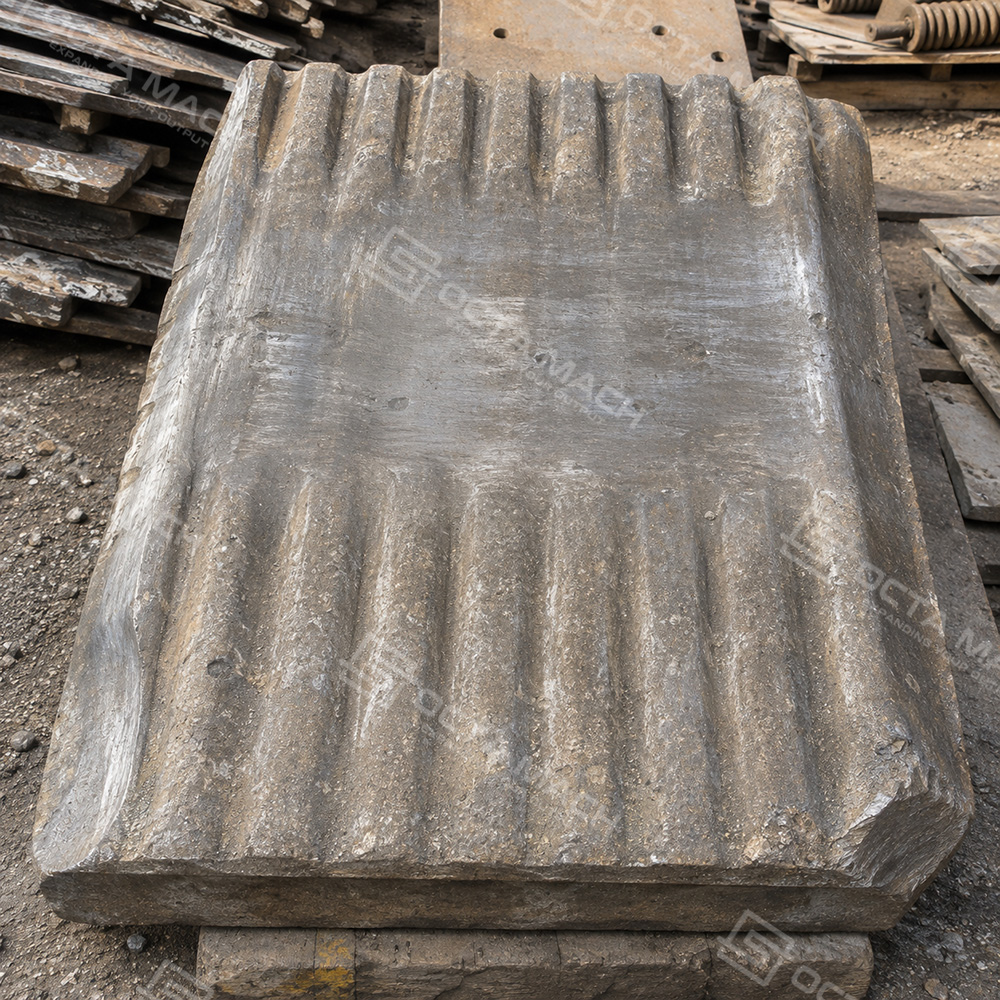
Fixed jaw plates can have different surface profiles and mounting structures depending on the crusher model. Corrugated designs feature raised longitudinal teeth, while recessed areas and fixing holes may form part of the plate’s supporting or mounting structure. The working-face profile, seating dimensions and fixing arrangement must match the original crusher design.
Swing Jaw Plate (Movable Jaw Plate)
The swing jaw plate is mounted on the moving jaw assembly, commonly referred to as the pitman. Driven by the eccentric shaft, the assembly moves toward and away from the fixed jaw throughout the crushing cycle.
During the crushing stroke, the swing plate transfers compressive force to the feed material. During the return stroke, the crushing chamber opens and the material moves downward under gravity.
Because of this repeated movement, the swing plate experiences cyclic loading as well as abrasion from rock sliding across its working surface. Its profile and thickness must remain compatible with the fixed jaw plate to maintain the intended crushing geometry.
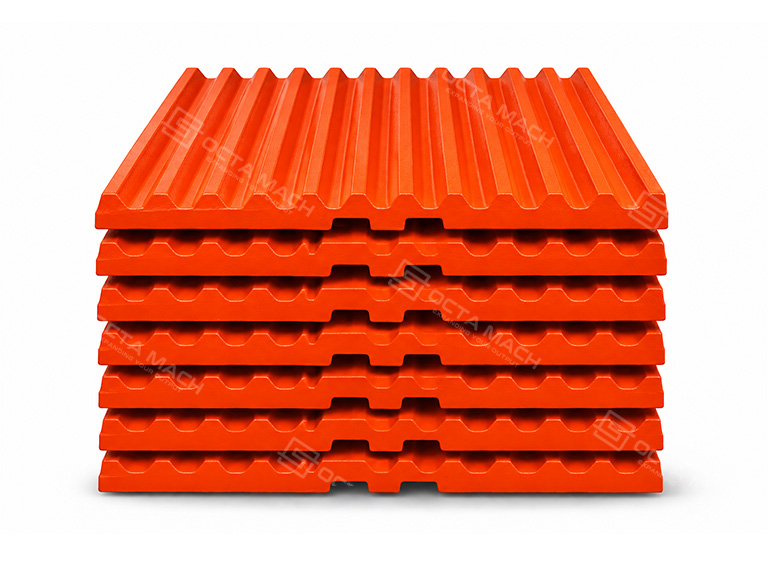
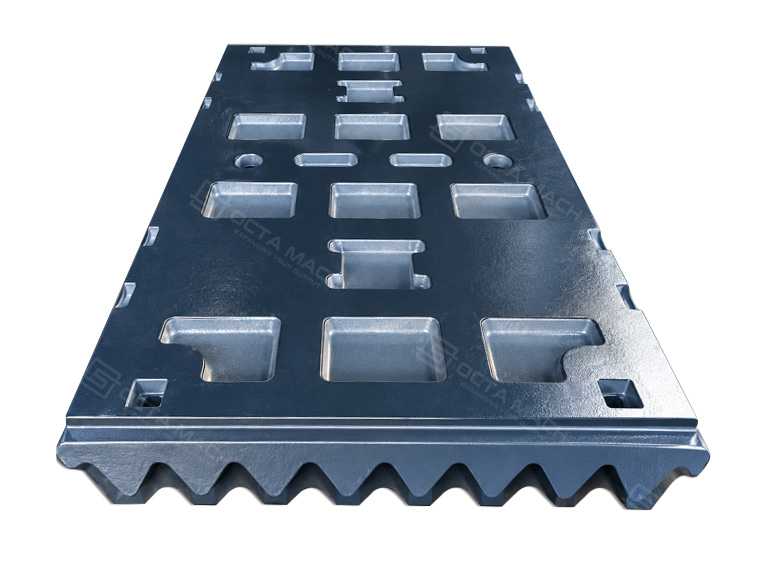
The swing jaw plate has a corrugated crushing surface, while the reverse side may feature recessed pockets and mounting structures that fit against the moving jaw assembly. The tooth profile and mounting details vary by crusher model and must match the original component design.
Fixed and swing jaw plates should be checked as a pair. A replacement plate with the correct overall dimensions may still cause problems if its tooth profile, pitch or seating geometry differs from the original design.Cheek plates are separate components installed along the inner sidewalls of the crushing chamber. They protect the crusher frame but do not replace the primary crushing function of the fixed and swing jaw plates.
Manganese Steel Grades and Material Selection
Austenitic high manganese steel is commonly selected for jaw crusher wear plates because of its combination of impact toughness and work-hardening capability.During crushing, repeated impact and compressive loading cause plastic deformation at the working surface. This gradually increases surface hardness while the underlying material retains the toughness needed to withstand further loading.
The effect depends on the actual crushing conditions. If the material mainly experiences low-impact sliding abrasion, the working surface may not develop sufficient work hardening.Under low-impact crushing conditions, the plate surface may not harden sufficiently, limiting the wear resistance that a higher manganese grade is expected to develop.
Octa Mach lists the following material options:
| Material Grade | Approximate Mn Content | Material Characteristics |
|---|---|---|
| Mn13 | 11–14% | High toughness and work-hardening capability |
| Mn18 | 17–19% | Higher manganese content for demanding wear conditions |
| Mn22 | 20–23% | High-manganese alloy option for specified heavy-duty applications |
| Mn18Cr2 | 17–19% Mn, approximately 2% Cr | Chromium-modified manganese steel |
Note: Manganese content ranges are indicative. Final chemical composition must follow the agreed material specification and test results.
Mn13 is a conventional high-manganese option. Its suitability depends on the impact level, feed characteristics and wear conditions inside the crushing chamber.
Mn18 has a higher manganese content and may be considered for applications involving combined impact and abrasive loading. Its actual performance still depends on heat treatment and operating conditions.
Mn22 is a higher-manganese option. It should be selected against the actual crushing duty rather than on manganese content alone. Sufficient impact and plastic deformation are necessary for work hardening to develop.
Mn18Cr2 contains chromium as an additional alloying element. Its chemical composition and heat-treatment requirements should be confirmed against the agreed material specification.
Manganese content alone is not enough to assess the quality of a finished jaw plate. Carbon content, alloy composition, solution heat treatment and casting quality affect the plate’s hardness and toughness, while feed size and impact intensity determine how much work hardening develops during operation.
Jaw Plate Tooth Profiles and Design
The teeth on a jaw plate form the working surface that grips and compresses incoming rock. Their shape and spacing affect how material enters the chamber, how it moves during crushing and how wear develops along the plate.
Octa Mach lists two main configurations: Corrugated Jaw Plates and Coarse Corrugated Jaw Plates.
| Design Factor | Effect on Crushing |
|---|---|
| Tooth Height | Influences material grip and the amount of usable wear material |
| Tooth Pitch | Affects the spacing between teeth and material movement |
| Tooth Profile | Influences material engagement and crushing contact |
| Plate Thickness | Determines the available wear section and fit against the jaw support |
| Profile Matching | Maintains the intended geometry between fixed and swing plates |
A corrugated profile uses a regular raised-and-recessed working surface. Its suitability depends on the feed size, chamber geometry and required product size.A coarse corrugated profile has a coarser tooth arrangement. The larger profile geometry may suit applications with larger feed particles, but the actual selection must account for the crusher’s designed feed opening and the matching jaw plate.For a more detailed comparison of different jaw plate tooth profiles and the factors affecting their selection, see our guide to jaw plate tooth profile selection.
The fixed and swing plates should use a compatible profile combination. Differences in tooth height or spacing can change the contact pattern and affect the way material passes through the chamber.The tooth profile should therefore be checked against the original jaw plate drawing rather than selected by appearance alone.
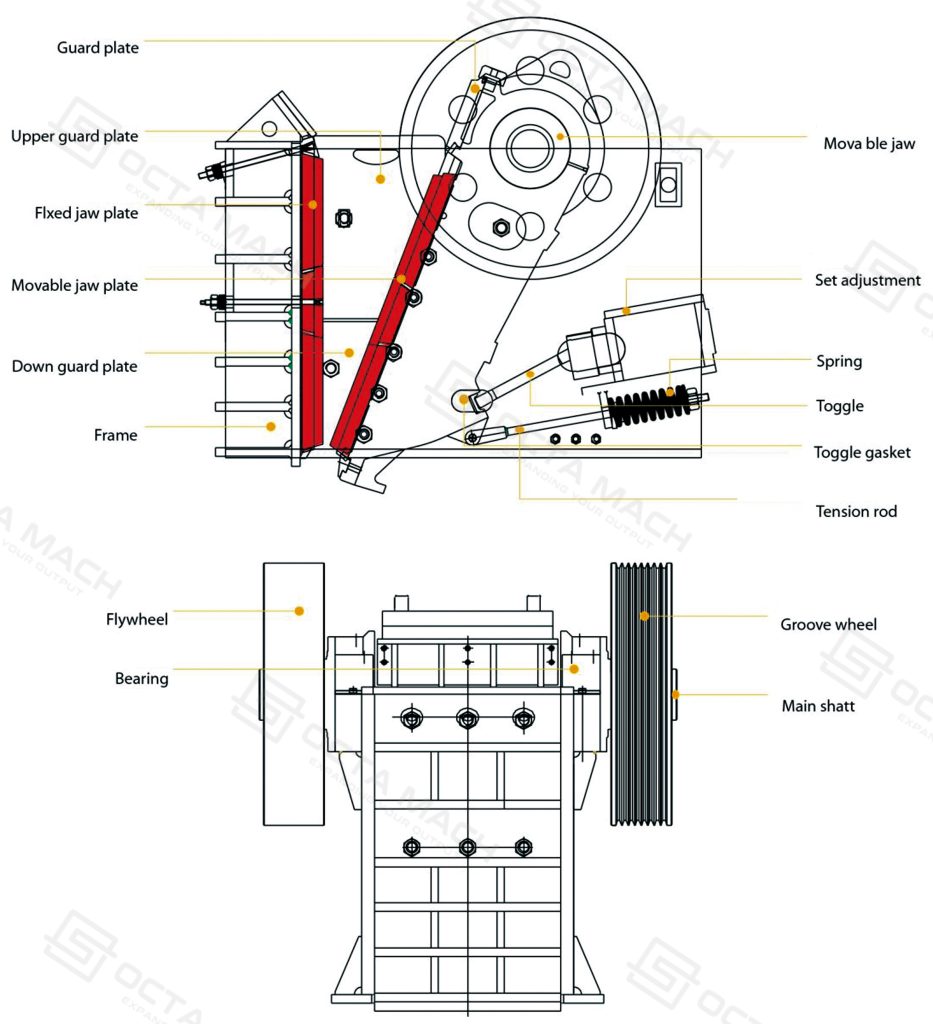
The diagram below identifies the positions of the fixed jaw plate, movable jaw plate and other main components within the jaw crusher structure.
Feed Size, Nip Angle and CSS Matching
The feed opening, nip angle and Closed Side Setting (CSS) all affect how rock enters the crushing chamber, gets gripped between the jaw plates and leaves as crushed material. If these parameters do not suit the feed characteristics and crusher design, the machine may experience poor feeding, material slippage or changes in product size and throughput.
Feed Size
The feed opening determines the size of material that can enter the crushing chamber. Maximum feed size must remain within the crusher manufacturer’s specified limit.Oversized rock can create localized loading and make material movement through the chamber difficult. At the other end, excessive fines can increase rubbing and scratching against the jaw plate surfaces, particularly near the lower section of the chamber.Feed gradation, moisture and clay content also influence material flow and chamber loading.
Nip Angle
The nip angle is the angle between the fixed and movable jaw plates. It influences the crusher’s ability to grip incoming rock and move it downward through the chamber.If the angle is too large for the crusher configuration, material may slide upward during the crushing stroke instead of being held effectively between the plates. This can reduce capacity and increase wear on the working surfaces.
Closed Side Setting (CSS)
CSS is the minimum distance between the fixed and movable jaw plates at the discharge end of the crushing chamber during the crushing cycle. The Open Side Setting (OSS) is the maximum distance measured when the jaw is at rest.CSS affects the discharged particle size, capacity and power demand. It also needs to remain within the permitted operating range of the crusher.The tooth profile can affect how the setting is measured, so the manufacturer’s measurement method should be followed when checking or adjusting CSS.
When replacing jaw plates, the tooth profile and chamber dimensions should match the original crusher design. The maximum feed size and operating CSS must also remain within the manufacturer’s specified limits, as changes in tooth geometry can affect material grip and the discharge opening.
Jaw Plate Manufacturing
Jaw plates are heavy cast wear components. Their performance depends on more than the nominal manganese content; casting condition, heat treatment and the accuracy of the finished working surfaces also matter.
The main manufacturing stages for high-manganese steel jaw plates include:
- Pattern and Mold Preparation: The casting pattern follows the approved component drawing, including tooth geometry, plate thickness, mounting features and machining allowances.
- Melting and Chemical Analysis: The molten steel is prepared to meet the specified alloy composition. Chemical analysis checks manganese, carbon and other required alloying elements.
- Casting and Cooling: The molten steel is poured into the prepared mold. Casting design and solidification control are important for limiting shrinkage and internal defects in heavy sections.
- Solution Heat Treatment: High-manganese steel castings undergo solution heat treatment followed by rapid quenching. The temperature and treatment cycle must suit the selected grade and casting section.
- Finishing and Machining: Gates and risers are removed, casting surfaces are cleaned, and specified seating or mounting surfaces are finished to the drawing.
- Final Inspection: The finished plates are checked for dimensions, tooth profile, surface condition and conformity with the agreed material requirements.
For austenitic manganese steel castings, ASTM A128/A128M is a relevant material specification where required by the purchase order. It covers Hadfield austenitic manganese steel castings and alloy modifications, including chemical composition and heat-treatment requirements. It does not replace the crusher-specific drawing or mounting dimensions.
Jaw Plate Wear and Replacement
Jaw plate wear develops as rock is repeatedly compressed and slides along the working surfaces. The jaw plate wear pattern depends on the feed material, chamber loading, tooth profile and distribution of material across the crusher width.
Flattened Teeth
The tooth crests gradually lose their original height. As the working profile becomes flatter, material may become more difficult to grip, particularly when processing larger or rounded feed particles.
Uneven Wear
One section of a jaw plate may wear faster than another. Uneven feeding, excessive fines or an unsuitable feed arrangement can concentrate loading in particular areas of the chamber.
Localized Surface Damage
Deep grooves, chipped sections and visible cracks require inspection. These conditions should not be treated as normal uniform wear, particularly if damage extends toward the mounting or supporting surfaces.
Changes in Crushing Performance
A reduction in throughput, changes in product gradation or increasing power demand under otherwise similar operating conditions may indicate that jaw plate wear is affecting the crushing process.
Replacement decisions should follow the crusher manufacturer’s wear limits, actual plate measurements and operating performance. There is no single service-hour limit or remaining-thickness percentage that applies to every jaw crusher.When fitting replacement plates, the supporting jaw surfaces, wedges, clamping components and retaining arrangements should also be inspected. Poor seating or loose retention can cause movement between the plate and its support, leading to abnormal contact and further damage.
Applications of Jaw Crusher Plates
Jaw crusher plates are used in primary and secondary crushing operations where rock and mineral feed must be reduced by compression.
- Granite and Basalt Crushing: Large, angular feed from blasting creates repeated impact and compressive loading. Tooth geometry and manganese steel selection need to account for both rock abrasiveness and the actual impact conditions.
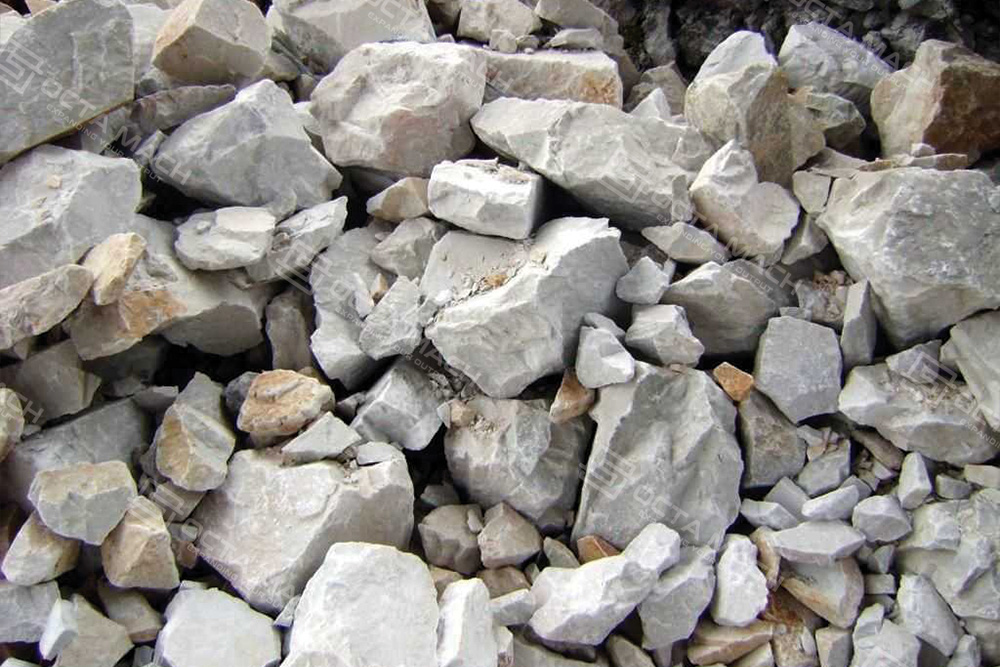
- Limestone Quarrying: Continuous feed and variations in particle size can affect how material fills the chamber. Feed distribution and the removal of excessive fines help maintain more uniform jaw plate wear.
- River Gravel Processing: Rounded and relatively smooth particles can be more difficult to grip than angular blasted rock. The tooth profile and nip angle should be checked against the actual feed characteristics.
- Construction and Demolition Recycling: Concrete fragments, masonry and mixed demolition material place different demands on the crushing chamber. Reinforcing steel and other uncrushable material also need to be managed to avoid damage and abnormal loading.
The same jaw plate grade or profile will not necessarily deliver the same operating results across these applications. The actual feed, crusher model and required discharge size should guide the selection.


Why Choose Octa Mach
Octa Mach supplies a range of Jaw Crusher Parts, including fixed jaw plates, swing jaw plates and cheek plates for PE series jaw crushers. The available materials include Mn13, Mn18 and Mn22, as well as Mn18Cr2 for selected fixed jaw plate configurations. Different tooth profiles and plate constructions are available to match the original crusher design.
Jaw plates are available in different dimensions, weights and tooth configurations. Corrugated and coarse corrugated profiles, together with one-piece and segmented designs, cover different crusher configurations. For replacement parts, the fit of the plate against the jaw support and the compatibility between fixed and swing plates are also taken into account.
For older crushers or equipment with modified configurations, the original part number is not always enough to identify the correct replacement. Octa Mach can work from crusher models, original drawings or photographs of existing plates to help identify the required dimensions, tooth profile and material grade.
FAQ
Q1:Are Jaw Crusher Plates Interchangeable Between Different Crusher Models?
A1:No. Jaw plates are designed for specific crusher configurations. Even similar models may have different dimensions, tooth profiles and mounting arrangements. Always verify the crusher model, part number and component drawing before ordering.
Q2:Can I Replace Only One Jaw Plate Instead of Both Fixed and Swing Plates?
A2:Yes, provided the remaining plate is still within its service limits and the two plates retain a compatible crushing profile. If the existing plate is heavily worn, replacing both may be the better option.
Q3:How Can I Compare the Service Life of Jaw Plates from Different Suppliers?
A3:Compare the tons of material processed per set under similar operating conditions, including rock type, feed size, throughput and CSS. Operating hours alone may not provide a reliable comparison.
Q4:What Should I Check When Receiving a New Jaw Crusher Plate?
A4:Check the part identification, overall dimensions, tooth profile, mounting surfaces and visible casting condition against the approved drawing. Any dimensional mismatch, deep crack or seating problem should be reported to the supplier before installation.