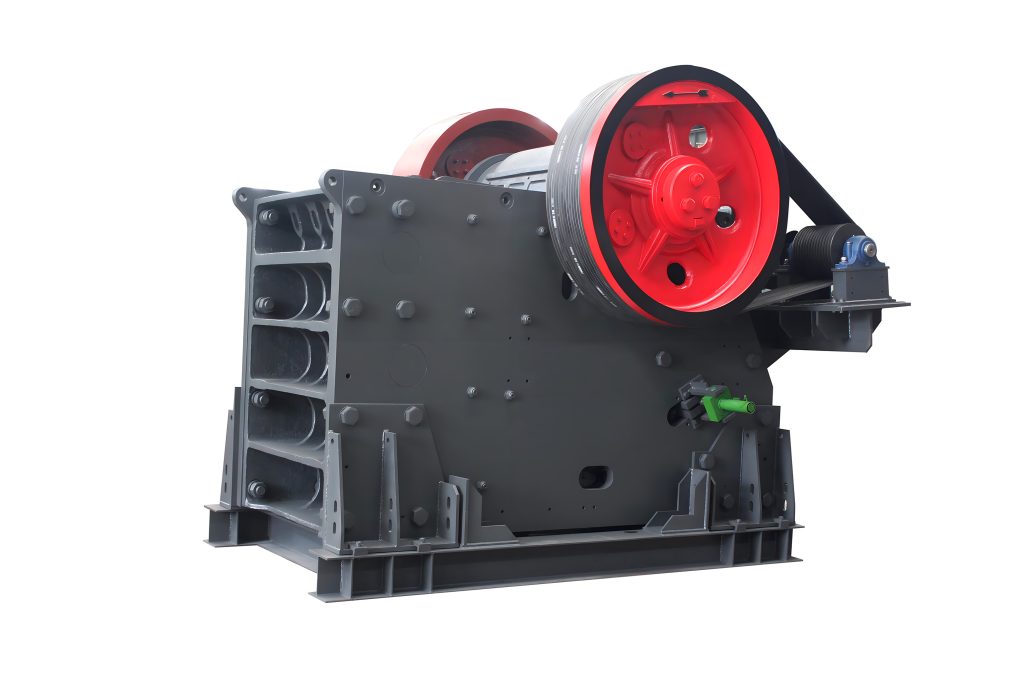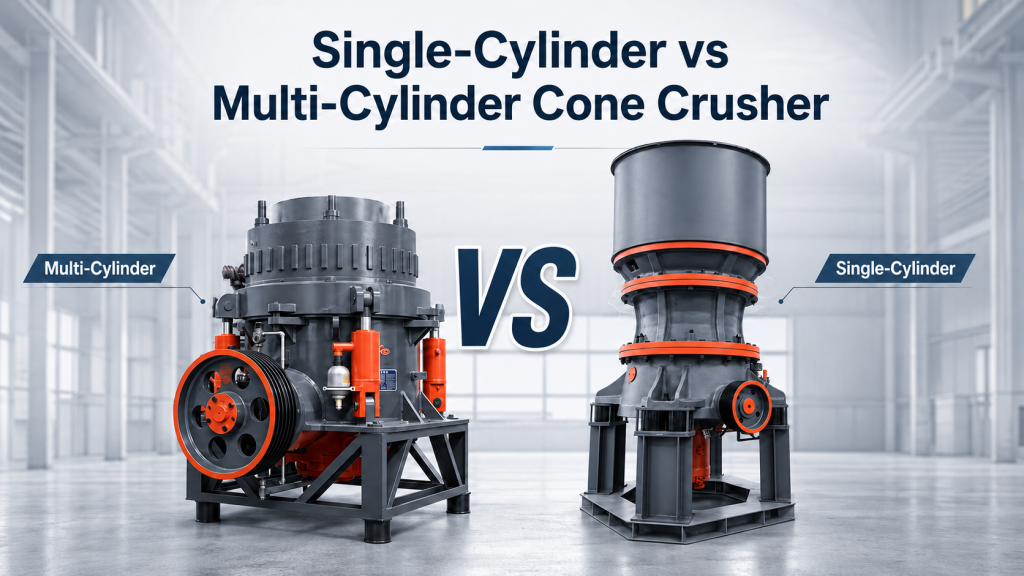
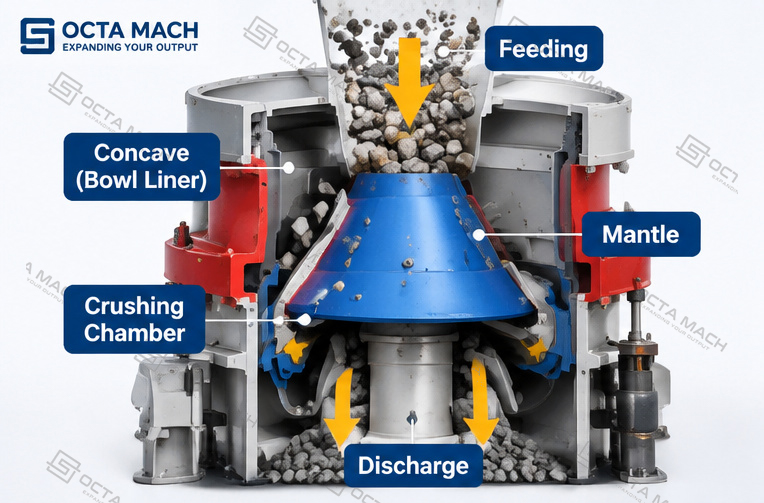
Cone crusher liners are exposed to repeated compression, abrasion and impact during rock crushing. The mantle is the moving inner liner mounted on the cone head, while the concave (bowl liner) forms the stationary outer crushing surface. Together, they define the crushing chamber and determine how feed material is compressed and reduced.
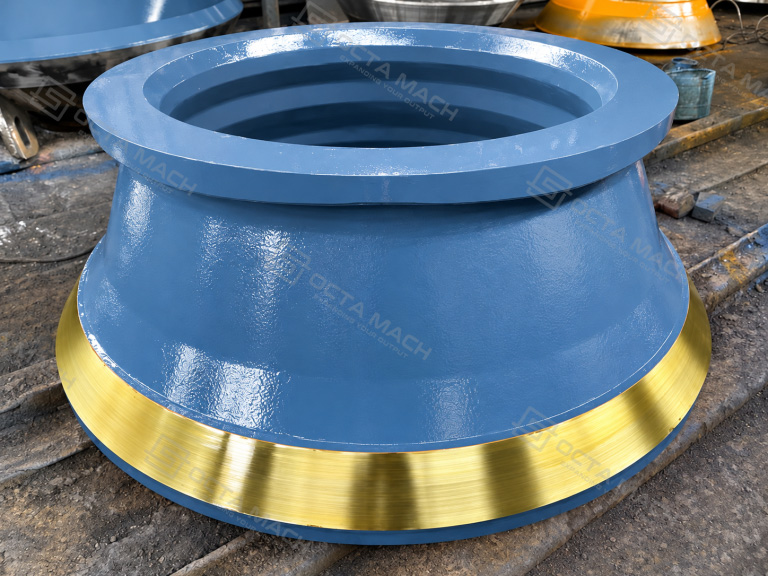
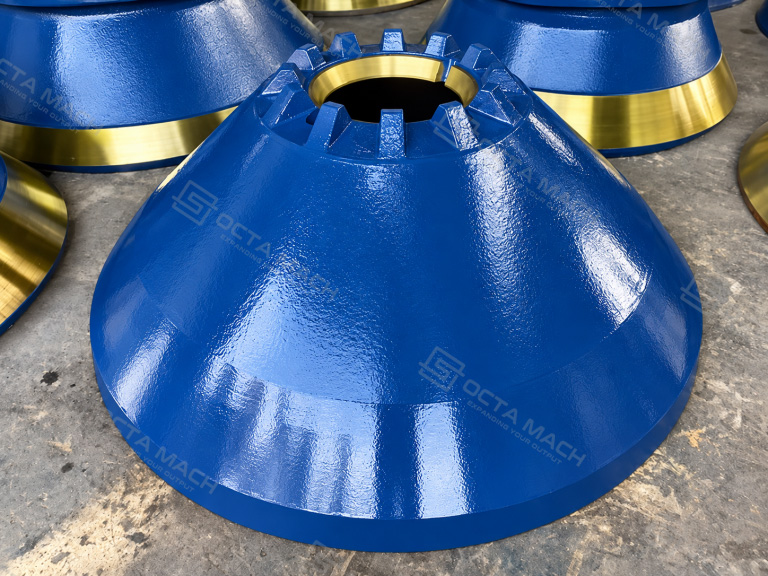
Wear is unavoidable, but an uneven wear profile often indicates that the crusher is not operating under suitable feed or chamber conditions. Identifying where wear concentrates, how quickly material is removed and whether the mantle and concave wear consistently can help locate the underlying problem before it causes production losses or premature liner replacement.
Common Mantle and Concave Wear Patterns
Most working wear develops around the active crushing zone, particularly near the parallel zone where the gap between the mantle and concave is smallest. However, feed size, chamber profile and material distribution can change the location and severity of wear.
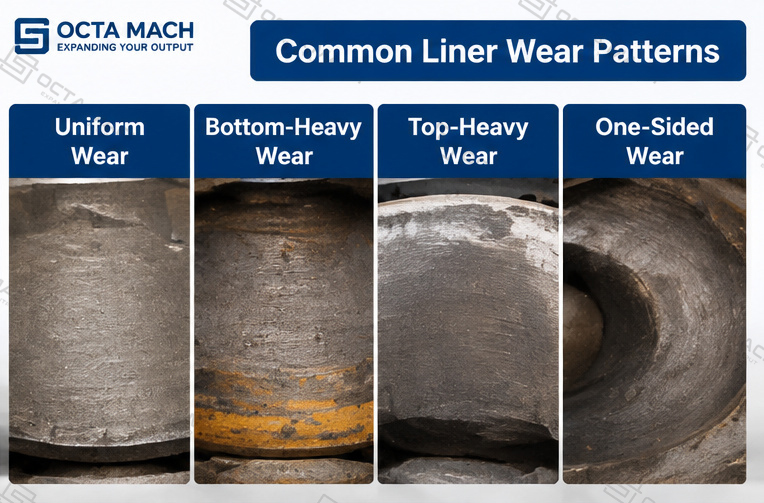
| Wear pattern | Typical observation | Possible cause |
|---|---|---|
| Uniform wear | Relatively consistent wear across the working profile | Stable feeding and suitable chamber selection |
| Bottom-heavy wear | Excessive wear near the lower crushing zone | Feed too small for the selected chamber |
| Top-heavy wear | Faster material loss near the feed opening | Oversized feed or unsuitable cavity profile |
| One-sided wear | One circumferential section wears faster | Off-center feeding or particle segregation |
| Localized damage | Deep grooves, pitting or surface cracking | Abrasive particles, impact or tramp material |
Bottom-heavy wear is frequently associated with a coarse crushing chamber receiving predominantly undersized material. The upper section performs less crushing, concentrating material reduction and wear toward the lower cavity.
In contrast, oversized feed can cause particles to accumulate or move around the feed opening, accelerating upper-section wear. One-sided wear requires a different investigation, particularly when coarse and fine particles enter different areas of the chamber.
These patterns are diagnostic indicators rather than definitive proof of a single cause. Mantle and concave measurements should be compared before changing operating settings or selecting replacement liners.
What Causes Abnormal Cone Crusher Liner Wear?
Feed size and gradation are among the first factors to investigate. Maximum feed size alone does not describe the entire feed condition. Excessive fines, poorly distributed particle sizes or a high proportion of oversized rock can prevent the chamber from being used effectively.
Uneven feed distribution is another common cause. A misaligned conveyor, poorly positioned chute or ineffective feed distributor can direct more material toward one side of the crusher. Particle segregation can create a similar condition, with coarse and fine material entering different sections of the chamber.
Stable chamber loading is equally important. For cone crushers designed to operate under choke-fed conditions, intermittent or insufficient feeding can produce irregular crushing loads and uneven liner utilization. Maintaining a consistent, non-segregated feed helps distribute material across the working chamber and reduces unnecessary power and pressure fluctuations.
Feed level should be checked together with feeder interruptions, material segregation and crusher loading records. A full chamber alone does not guarantee correct feeding if oversized particles cause bridging or fine, moist material accumulates around the feed opening. The appropriate feed level and operating range must follow the specific crusher configuration.
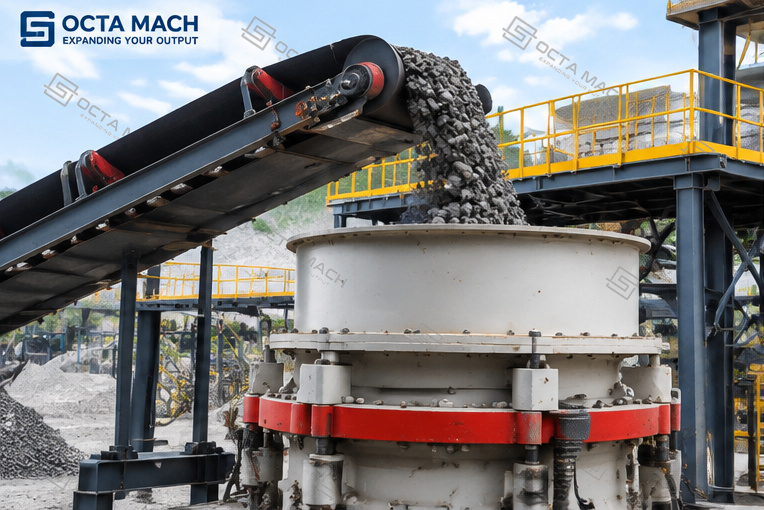
The crushing chamber itself also matters. Mantle and concave profiles must match the feed characteristics, required product size and crusher configuration. An unsuitable liner combination or eccentric throw can change the effective crushing zone and produce an irregular wear profile.
Other operating factors include:
- CSS (Closed-Side Setting): Changes the minimum discharge opening and affects product gradation, capacity and power draw.
- Eccentric speed and throw: Influence mantle movement and the compression conditions inside the chamber.
- Material abrasiveness: Quartz-rich rock and other abrasive minerals can accelerate liner material loss.
- Moisture and clay content: Can affect material flow, chamber packing and feeding stability.
Changing liner material without checking these conditions may increase replacement costs without correcting the original problem.
How Liner Wear Affects Crushing Performance
As cone crusher liners wear, the original chamber geometry gradually changes. Even when the crusher remains operational, the worn profile can affect production consistency and maintenance requirements.
| Performance indicator | Potential impact |
|---|---|
| Crushing capacity | Reduced output when chamber utilization deteriorates |
| Product gradation | Changes in discharge particle size and distribution |
| Particle shape | Increased flaky or elongated particles under unfavorable conditions |
| Power consumption | Changes in power draw and energy consumption per tonne |
| Maintenance interval | More frequent inspections and liner replacement |
| Equipment condition | Risk of damage to liner seating surfaces if wear limits are exceeded |
CSS adjustments may compensate for some changes during the liner’s service life, but they cannot fully restore an unsuitable or severely distorted crushing chamber.
Why a Stable CSS Can Still Hide Liner Wear
A constant closed-side setting does not guarantee that the crushing chamber retains its original capacity. As the mantle and concave wear, the cavity profile changes, affecting the space available for material entry, compression and discharge.
A worn chamber may process less material even when the CSS remains unchanged. Increasing the CSS can sometimes recover throughput, but the larger discharge opening may also produce coarser material.
The more reliable approach is to compare CSS, feed gradation, throughput and product size distribution throughout the liner’s service life. If capacity decreases while feed conditions and CSS remain relatively stable, the remaining chamber profile should be reviewed before further setting adjustments.
Liners should therefore be replaced according to the manufacturer’s wear limits and inspection results, rather than waiting until the metal is completely consumed.
What Site Records Help Identify the Cause?
A visual inspection shows where wear has occurred, but operating records help explain why it happened. Comparing information from the same liner replacement cycle is particularly useful.
| Record | Important information | Purpose |
|---|---|---|
| Liner wear measurements | Remaining thickness at upper, middle and lower positions | Identifies concentrated wear |
| Feed sieve analysis | Maximum size, particle distribution and fines content | Checks feed-to-chamber compatibility |
| CSS and OSS records | Operating discharge settings | Tracks chamber adjustment and wear compensation |
| Production records | Throughput, operating hours and total tonnage | Compares liner life under different conditions |
| Power consumption | Motor power and kWh per tonne | Identifies changes in crushing performance |
| Product sampling | Discharge particle-size distribution and P80 | Evaluates crushing consistency |
| Maintenance records | Liner identification, installation date and damage photographs | Checks replacement history and recurring problems |
Wear measurements should be taken at repeatable positions on both the mantle and concave. Recording only the total operating hours is insufficient because two liner sets may process different tonnages or different rock types during the same period.
Photographs from several circumferential positions, together with thickness measurements, provide a more reliable basis for identifying asymmetric wear.
Comparing Liner Life by Tonnes Processed
Operating hours alone do not provide a complete measure of cone crusher liner life. Two liner sets may operate for similar periods but process different tonnages under different material and loading conditions.
A more useful comparison includes total tonnes processed per liner set and the corresponding wear-part cost per tonne. The latter can be calculated by dividing the combined purchase cost of the mantle and concave by the total tonnage processed during their service cycle.
For a meaningful comparison, the records should also identify feed abrasiveness, CSS, chamber profile and operating conditions. When these factors are reasonably comparable, changes in tonnage, wear distribution and replacement frequency provide a clearer basis for evaluating liner performance.
Should You Check the Feed First or the Crushing Chamber?
When abnormal wear appears, checking the feed arrangement is generally the most practical starting point. It is often possible to identify feeding problems through sieve analysis, conveyor inspection and chamber-level observations before changing the liner configuration.
A practical inspection sequence is:
- Map the wear profile. Identify whether material loss is concentrated at the top, bottom, one side or the parallel zone.
- Check feed size and distribution. Review sieve analysis, oversized particles, fines content, conveyor alignment and feed segregation.
- Verify the chamber profile. Confirm that the installed mantle and concave combination matches the actual feed and required product size.
- Review operating settings. Compare CSS, eccentric speed, feed rate and power consumption with the equipment manufacturer’s recommendations.
- Inspect liner condition and material. Check for cracks, grooves, abnormal impact damage, incorrect installation or unsuitable liner material.
The initial inspection should follow the observed wear pattern:
| Observed condition | First area to investigate |
|---|---|
| Bottom-heavy wear | Feed gradation and chamber selection |
| Top-heavy wear | Maximum feed size and feed opening |
| One-sided wear | Conveyor alignment and feed distribution |
| Irregular wear across the chamber | Feed segregation and chamber loading |
| Sudden local damage | Tramp material and liner installation |
If feed conditions are stable but abnormal wear continues, the next step is a more detailed review of chamber geometry, eccentric configuration and liner compatibility.
Cone Crusher Wear Parts and Equipment Selection by Octa Mach
Octa Mach focuses on crushing and mineral processing equipment for quarry, aggregate and mining applications. Our equipment selection approach considers material characteristics, feed size, required output, production capacity and operating conditions rather than treating individual components as isolated products.
For cone crusher applications, selecting compatible cone crusher wear parts is important for maintaining chamber geometry and production stability. Mantle and concave profiles should be evaluated together with the crusher model, feed gradation and required discharge size. This application-based approach helps match equipment configurations with actual processing requirements and supports more reliable operation throughout the liner replacement cycle.
FAQ
Q1: What Causes Uneven Wear on Cone Crusher Mantles and Concaves?
A: Uneven cone crusher liner wear is commonly linked to off-center or segregated feed, inconsistent feed grading, or a mismatch between the mantle, concave and crushing duty. Check feed distribution, chamber profile and CSS before blaming liner material.
Q2: Why Does the Bottom of a Cone Crusher Liner Wear Faster?
A: The lower chamber handles much of the final reduction, so wear often concentrates near the parallel zone. Feed that is too small for the selected cavity intensifies lower-zone wear, while oversized feed can shift wear toward the top.
Q3: How Can Cone Crusher Liner Wear Be Monitored Accurately?
A: Record mantle and concave profiles at repeatable axial and circumferential points, with dated photos and measurements. Compare wear progression with CSS, throughput, power draw and product gradation, using the crusher OEM’s limits rather than one universal wear threshold.
Q4:Should Cone Crusher Mantles and Concaves Be Replaced Together?
A: Normally, yes. A new mantle paired with a worn concave, or vice versa, changes the chamber profile and can restrict feed entry, reducing capacity. Replace these cone crusher wear parts as a matched set unless the crusher OEM specifies an approved alternative.