The crusher selection process requires careful evaluation of material properties, production targets, and operating conditions in quarrying, mining, and aggregate applications. A suitable crushing machine must match the characteristics of the raw material, required production capacity, final product specifications, and the complete crushing process. Crusher selection depends on technical factors such as material hardness, feed size, crushing stage, and output requirements, which determine whether the equipment can achieve stable and efficient operation in a specific application.
When evaluating a rock crusher for sale, equipment selection should not be based only on initial cost or rated capacity. Different materials require different crushing methods. Hard and abrasive rocks such as granite, basalt, and quartzite usually require compression crushing equipment, while limestone and recycled concrete may be better suited for impact crushing. The correct crusher combination improves production stability, reduces unnecessary wear, and helps achieve consistent final product quality.
Why Crusher Selection Matters
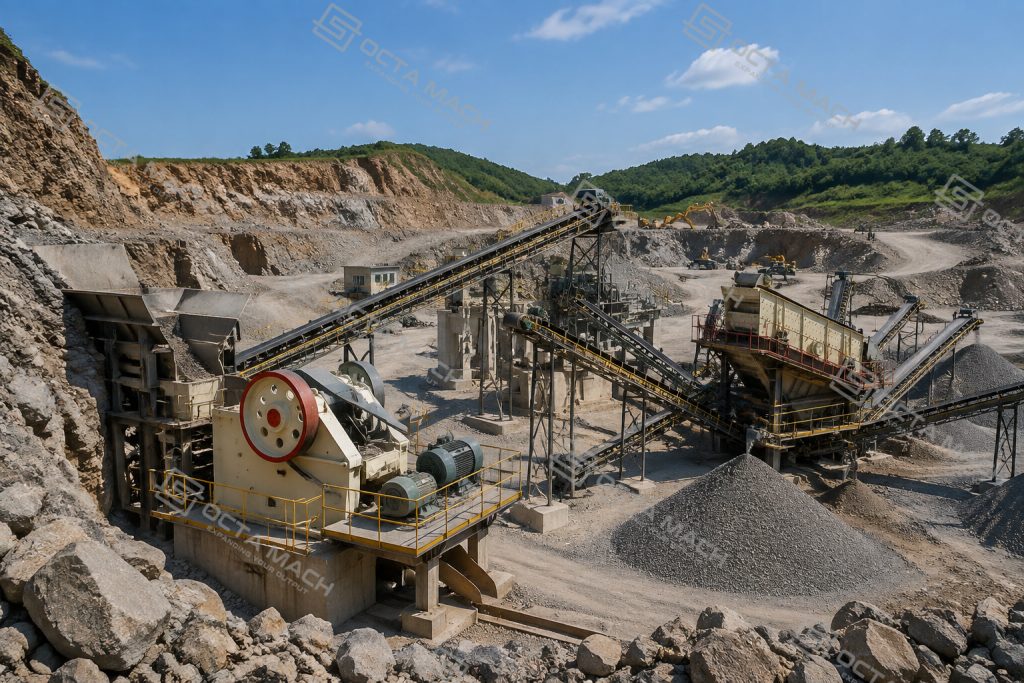
Crusher selection affects the performance of the entire crushing plant. A crusher that works efficiently in one application may not achieve the same results in another because material properties, feeding conditions, and production requirements are different.
For example:
- Granite requires strong crushing force and wear-resistant components because of its high hardness.
- Limestone is easier to crush and often benefits from impact crushing when better particle shape is required.
- River stone may require additional shaping equipment because of its rounded characteristics.
- Construction waste requires flexible equipment that can process variable feed materials.
The correct crusher should be selected according to the complete production target, including feed conditions, required product size, production capacity, and downstream equipment requirements.
| Selection Factor | Influence on Crushing Performance |
|---|---|
| Material Hardness | Determines required crushing force |
| Abrasiveness | Affects wear part consumption |
| Feed Size | Determines crusher opening requirement |
| Capacity | Determines equipment size and configuration |
| Output Size | Determines crushing stage selection |
| Product Shape | Influences crusher type selection |
Key Factors Affecting Crusher Selection
Material Characteristics
The physical properties of the raw material determine the suitable crushing method.
Hard and abrasive materials normally require compression crushing because they need strong crushing force and stable wear performance. Materials with moderate hardness and specific particle shape requirements may be better suited for impact crushing.
| Material | Characteristics | Recommended Crusher Combination |
|---|---|---|
| Granite | Hard, abrasive, high compressive strength | Jaw Crusher + Cone Crusher |
| Basalt | Very hard volcanic rock | Jaw Crusher + Hydraulic Cone Crusher |
| Limestone | Medium hardness, lower abrasion | Jaw Crusher + Impact Crusher |
| River Stone | Rounded particles, variable hardness | Jaw Crusher + Cone/VSI Crusher |
| Iron Ore | Dense and abrasive mineral | Jaw Crusher + Cone Crusher |
| Concrete Waste | Mixed material requiring recycling | Mobile Jaw Crusher + Impact Crusher |
Feed Size and Output Requirements
Feed size is one of the most important factors when selecting crushing equipment.
Primary crushers normally receive large rocks from blasting or excavation, while secondary crushers receive reduced material from the first crushing stage.
| Parameter | Importance |
|---|---|
| Maximum Feed Size | Determines required crusher opening |
| Feed Distribution | Affects material flow and crushing efficiency |
| Output Size | Determines crusher adjustment requirements |
| Particle Shape | Influences final product quality |
A crusher with insufficient feed opening may cause blockage, unstable production, and increased wear.
Capacity Requirements
Crusher capacity is usually measured in tons per hour (t/h), but actual production depends on operating conditions.
Important factors include:
- Material hardness
- Feed size distribution
- Moisture content
- Closed side setting (CSS)
- Feeding stability
- Downstream equipment capacity
| Crusher Type | Main Capacity Consideration |
|---|---|
| Jaw Crusher | Large-volume primary reduction |
| Cone Crusher | Stable secondary crushing throughput |
| Impact Crusher | Depends on feed size and material hardness |
| Mobile Crusher | Depends on integrated crushing system |
A higher rated capacity does not always mean better production. The crusher must be correctly matched with feeders, screens, conveyors, and other equipment.
Crusher Selection Based on Crushing Stages
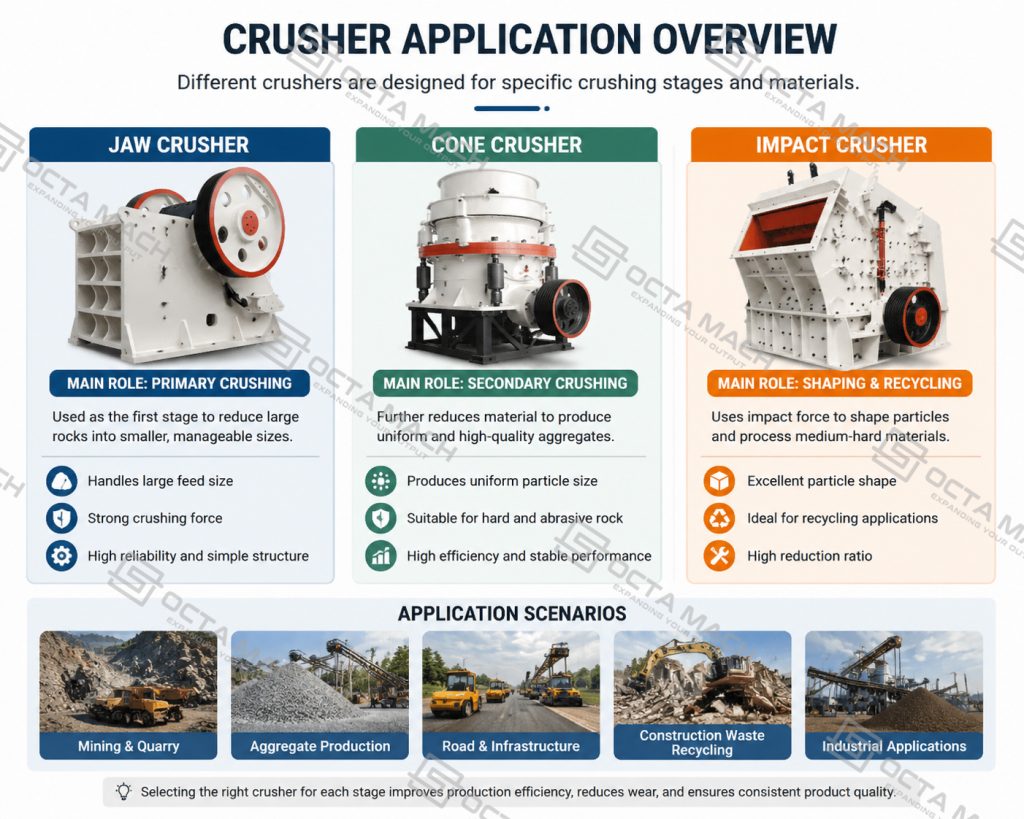
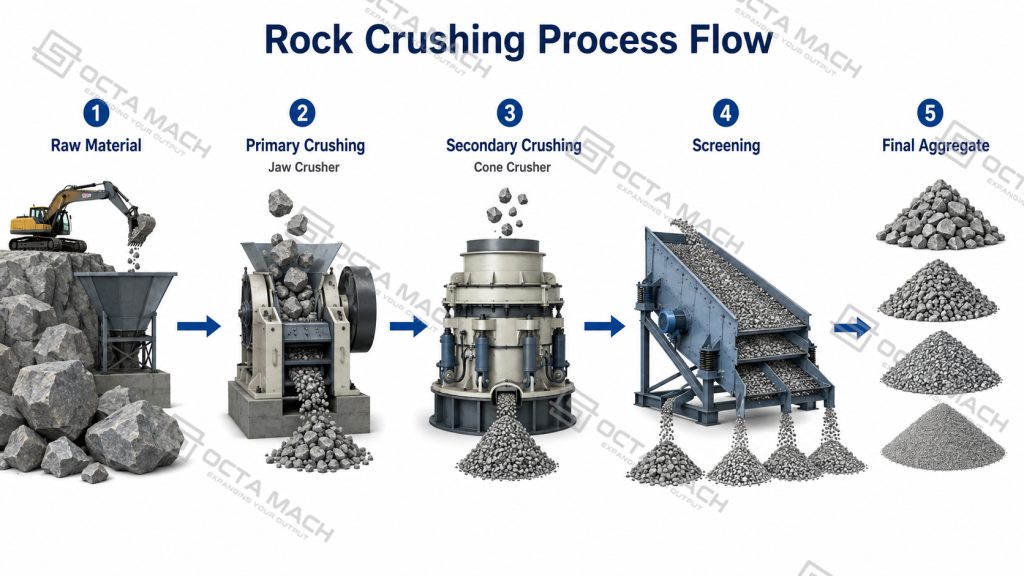
Most industrial crushing plants use multiple stages because reducing large rock directly to final product size is usually inefficient.
| Crushing Stage | Main Purpose | Common Equipment |
|---|---|---|
| Primary Crushing | Reduce large raw material | Jaw Crusher |
| Secondary Crushing | Produce smaller and controlled material | Cone Crusher, Impact Crusher |
| Tertiary Crushing | Improve particle size and shape | Cone Crusher, VSI Crusher |
| Screening | Separate final products | Vibrating Screen |
The role of each crusher is different:
- Primary crushers focus on accepting large feed material.
- Secondary crushers focus on reducing size and improving consistency.
- Fine crushing equipment focuses on final product grading and particle shape.
Each crushing stage has a different purpose. Primary crushing focuses on reducing large feed material, while secondary crushing improves size control and product consistency.Engineers can use the Crusher Selection Guide to compare crusher types, applications, and key selection parameters before designing a complete crushing process.
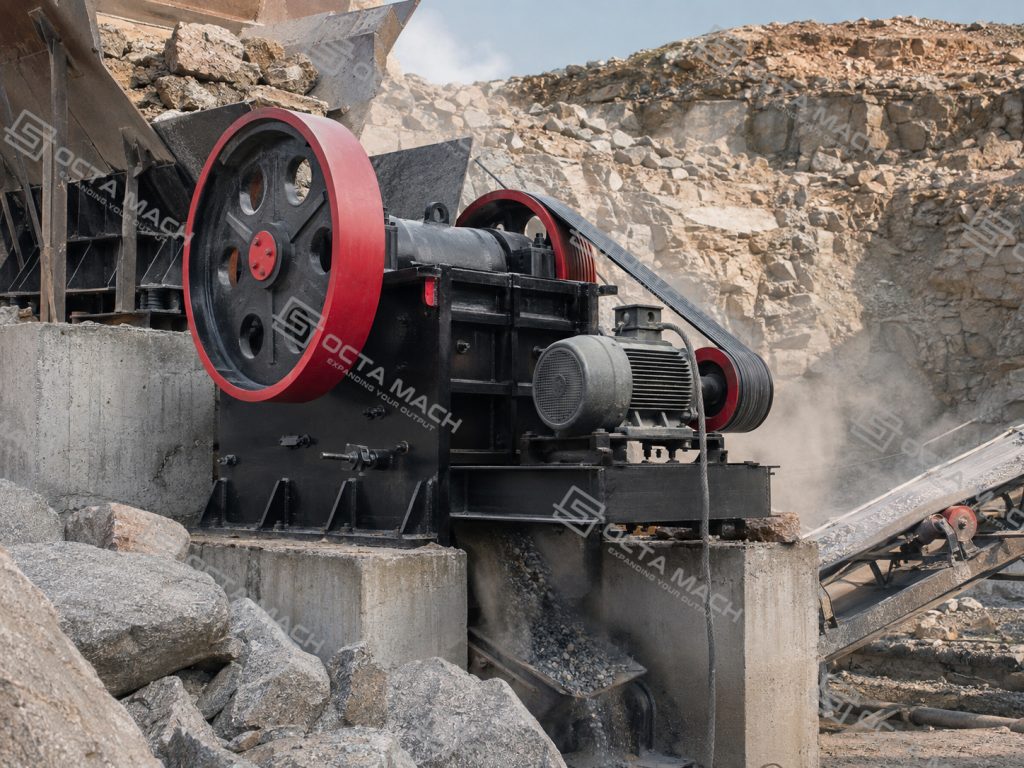
Jaw Crusher for Primary Crushing
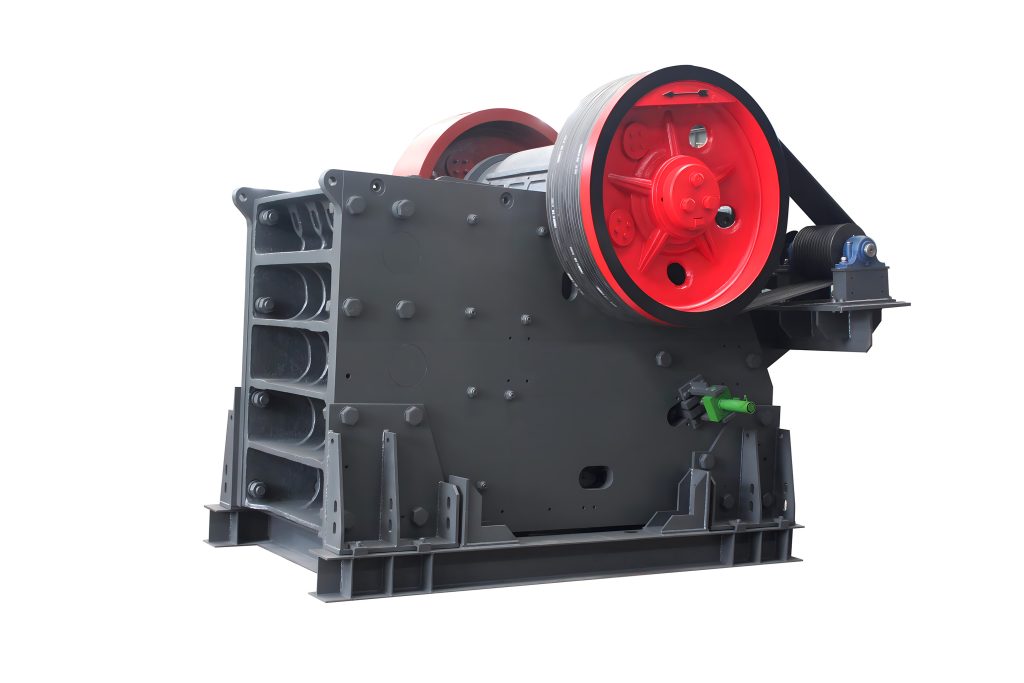
Jaw crusher is commonly used as the first crushing stage in mining, quarrying, and aggregate production. It reduces large rocks through compression between a fixed jaw plate and a movable jaw plate.
Because of its large feed opening and strong crushing force, jaw crusher is widely used for:
- Granite quarrying
- Basalt crushing
- Iron ore processing
- Aggregate production
- Construction waste recycling
For applications requiring the best crusher for hard rock, jaw crushers are usually selected as primary crushing equipment because they can handle large and abrasive materials directly from mining or quarry operations.
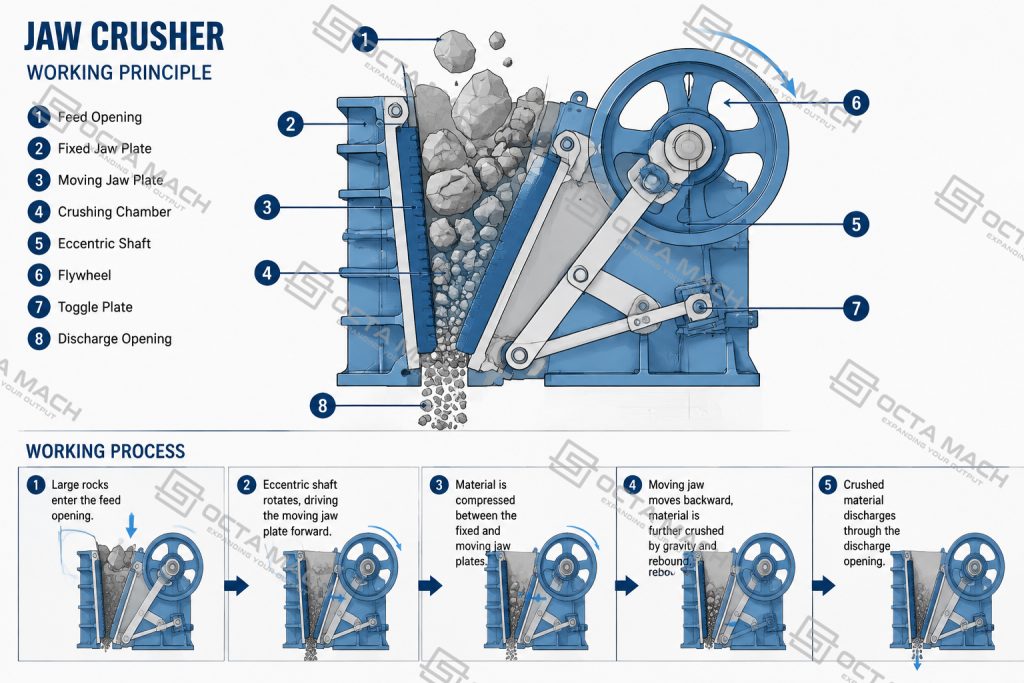
Jaw Crusher Working Principle
The crushing process includes:
- Raw material enters through the feed opening.
- The eccentric shaft drives the movable jaw.
- Material is compressed between the jaw plates.
- Crushed material exits through the discharge opening.
| Component | Function |
|---|---|
| Fixed Jaw Plate | Provides stationary crushing surface |
| Movable Jaw Plate | Applies crushing force through movement |
| Eccentric Shaft | Creates jaw movement |
| Toggle Plate | Transfers force and provides protection |
| Flywheel | Maintains smooth operation |
Jaw Crusher Selection Factors
| Parameter | Why It Matters |
|---|---|
| Feed Opening | Determines the maximum feed size the jaw crusher can accept. A larger opening allows processing of larger blasted rock without additional size reduction. |
| Jaw Plate Design | Influences crushing efficiency, wear rate, and material grip inside the crushing chamber. The suitable profile depends on material hardness and abrasiveness. |
| Closed Side Setting (CSS) | Controls the final discharge size and affects capacity. A smaller CSS produces finer output but may reduce throughput. |
| Crushing Chamber Design | Determines material flow, crushing ratio, and contact between rock and jaw plates. |
| Feeding Stability | Ensures consistent loading conditions and helps maintain stable capacity and product size. |
Cone Crusher for Hard Rock and Granite Aggregate Production
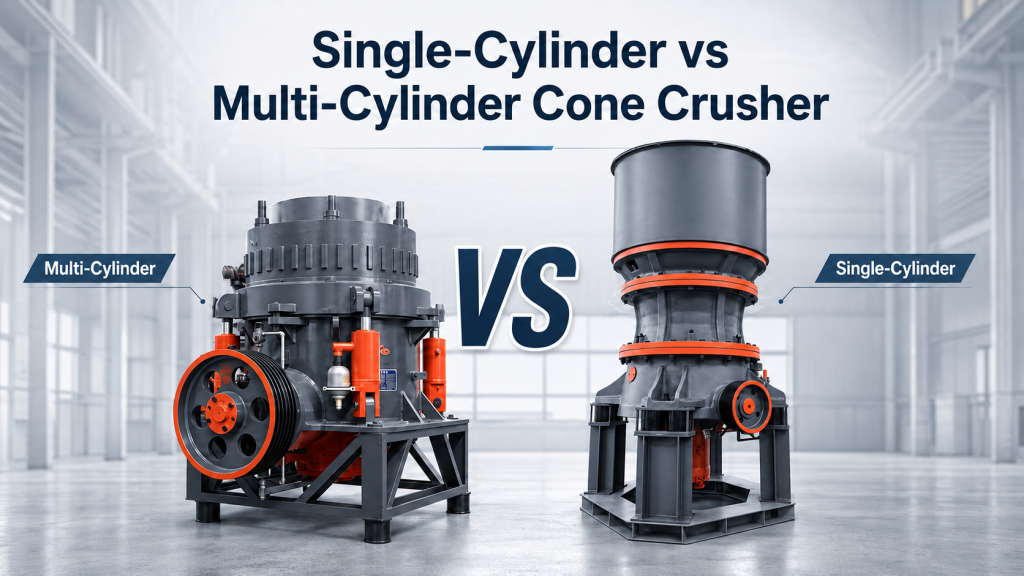
Cone crushers are widely used for secondary and tertiary crushing in quarrying, mining, and aggregate production. They reduce material size through compression between the mantle and concave, making them suitable for hard and abrasive materials such as granite, basalt, and other high-strength rock.
For extremely hard materials such as granite and basalt, cone crushers are often preferred because compression crushing generally provides better wear performance. Hydraulic cone crushers are often selected for hard rock applications where stable output, adjustable crushing conditions, and efficient operation are required.
A cone crusher for granite aggregate production is commonly selected because granite requires:
- High crushing force
- Stable output size
- Strong wear resistance
- Long operating reliability
| Application | Reason for Selection |
|---|---|
| Granite Aggregate | Produces consistent aggregate size |
| Basalt Processing | Handles abrasive hard rock |
| Mining Operations | Suitable for secondary ore reduction |
| Road Construction | Provides controlled particle grading |
Important cone crusher selection factors include:
| Parameter | Why It Matters |
|---|---|
| Crushing Chamber Design | Determines material flow, reduction performance, and the suitable application range of the cone crusher. |
| CSS Setting | Controls final product size and affects the balance between output capacity and product fineness. |
| Feed Size | Must match the crusher opening to prevent overload and maintain stable operation. |
| Wear Parts | Influence maintenance frequency, operating cost, and long-term crushing efficiency. |
| Capacity | Must match the required production rate and the capacity of the complete crushing plant. |
Hydraulic cone crushers use hydraulic systems for crusher adjustment, overload protection, and easier maintenance access, making them suitable for demanding hard rock crushing applications.
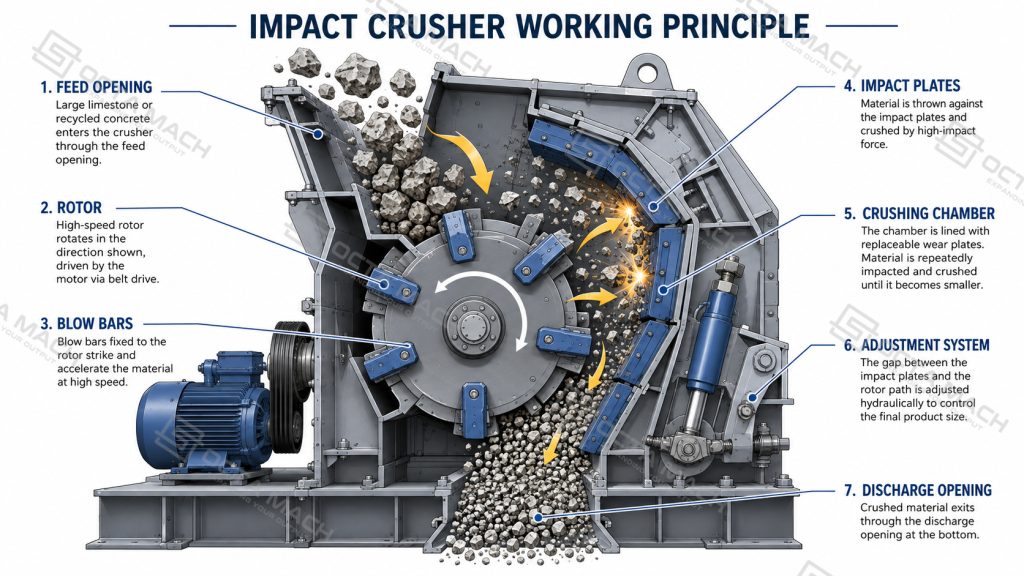
Impact Crusher for Limestone and Recycling Applications
Impact crushers use impact force to reduce material size. A rotating rotor accelerates material toward impact plates, creating high reduction efficiency and improved particle shape.
An impact crusher for limestone is commonly selected because limestone has moderate hardness and responds well to impact crushing.
Impact crushers are widely used for:
- Limestone aggregate production
- Concrete recycling
- Construction waste processing
- Medium-hard materials
| Feature | Impact Crusher Characteristics |
|---|---|
| Crushing Method | Rotor impact crushing |
| Product Shape | Better cubic particle shape |
| Reduction Ratio | Suitable for higher reduction requirements |
| Suitable Materials | Limestone and recycling materials |
| Limitation | Higher wear on very abrasive rock |
For extremely hard materials such as granite and basalt, cone crushers are often preferred because compression crushing generally provides better wear resistance.
Mobile Crusher Selection
Mobile crushers combine crushing equipment with a movable chassis, feeder, conveyor, and control system. They are suitable for projects where crushing locations change or material transportation distance needs to be reduced.
Common applications include:
- Quarry expansion
- Road construction
- Demolition recycling
- Remote mining projects
| Feature | Stationary Crusher | Mobile Crusher |
|---|---|---|
| Installation | Fixed foundation | Mobile chassis |
| Relocation | Difficult | Easy movement |
| Best Application | Long-term production | Flexible projects |
| Material Transportation | Higher hauling cost | Reduced hauling distance |
Common mobile configurations include:
| Equipment Type | Application |
|---|---|
| Mobile Jaw Crusher | Primary crushing of large rock |
| Mobile Cone Crusher | Secondary aggregate production |
| Mobile Impact Crusher | Recycling and shaping |
| Tracked Crusher | Remote site operations |
Crusher Capacity Comparison
Crusher selection should consider not only capacity but also material characteristics and final product requirements.
| Crusher Type | Crushing Stage | Suitable Material | Main Advantage |
|---|---|---|---|
| Jaw Crusher | Primary | Granite, basalt, ore | Handles large feed size |
| Cone Crusher | Secondary/Tertiary | Hard rock, granite aggregate | Stable output |
| Impact Crusher | Secondary | Limestone, recycling | Better particle shape |
| VSI Crusher | Fine Crushing | Manufactured sand | Improves shaping |
Common Crusher Selection Mistakes
Selecting Equipment Only Based on Price
The lowest initial investment does not always provide the lowest operating cost.
Important long-term factors include:
- Wear part consumption
- Maintenance frequency
- Energy requirements
- Production stability
Ignoring Material Properties
Different materials require different crushing methods.
For example:
- Granite normally requires compression crushing.
- Limestone may benefit from impact crushing.
- Recycled concrete requires flexible processing equipment.
Selecting Capacity Without Considering the Complete Plant
The crusher must match:
- Feeder capacity
- Conveyor capacity
- Screening capacity
- Stockpile requirements
A production line should be considered as a complete system rather than a single machine.
FAQ
F1: How do I choose the right crusher for my application?
Q1: The right crusher should be selected based on the material characteristics, maximum feed size, required capacity, crushing stage, and final product requirements. Jaw crushers are commonly used for primary crushing of large raw materials, while cone crushers and impact crushers are usually selected for secondary or tertiary crushing depending on material properties and output requirements.
F2: What is the best crusher for hard rock?
Q2: For hard and abrasive materials such as granite, basalt, and quartzite, a combination of jaw crusher and cone crusher is commonly used. The jaw crusher performs the initial size reduction, while the cone crusher provides stable secondary crushing with better control of aggregate size, product consistency, and wear performance.
F3: Which crusher is suitable for limestone processing?
Q3: Limestone is generally suitable for impact crushing because of its moderate hardness and relatively good response to impact force. An impact crusher for limestone can provide efficient size reduction and improved particle shape, making it suitable for aggregate production, construction materials, and recycling applications.
F4: What factors should be considered when selecting a crusher?
Q4: Crusher selection should consider material hardness, feed size, production capacity, discharge requirements, crushing stage, and the complete plant configuration. A crusher with a higher rated capacity does not always provide better performance if it is not properly matched with the feeder, screening equipment, and downstream processing system.