
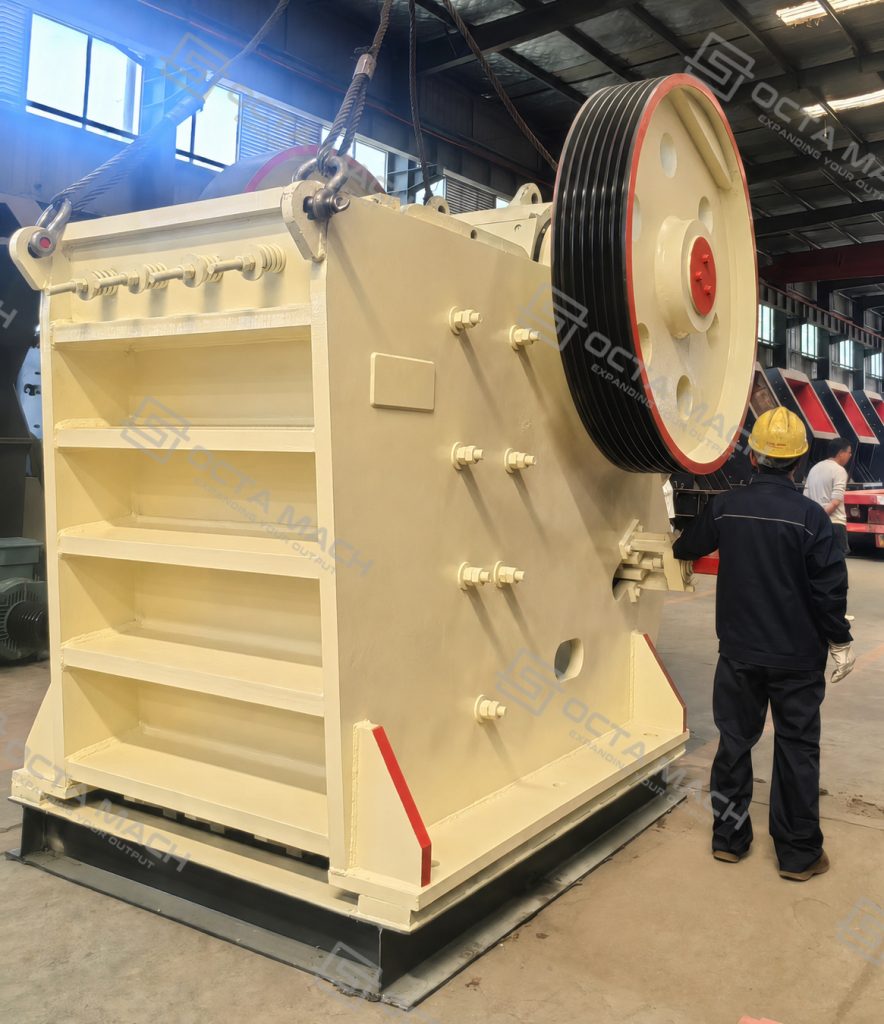
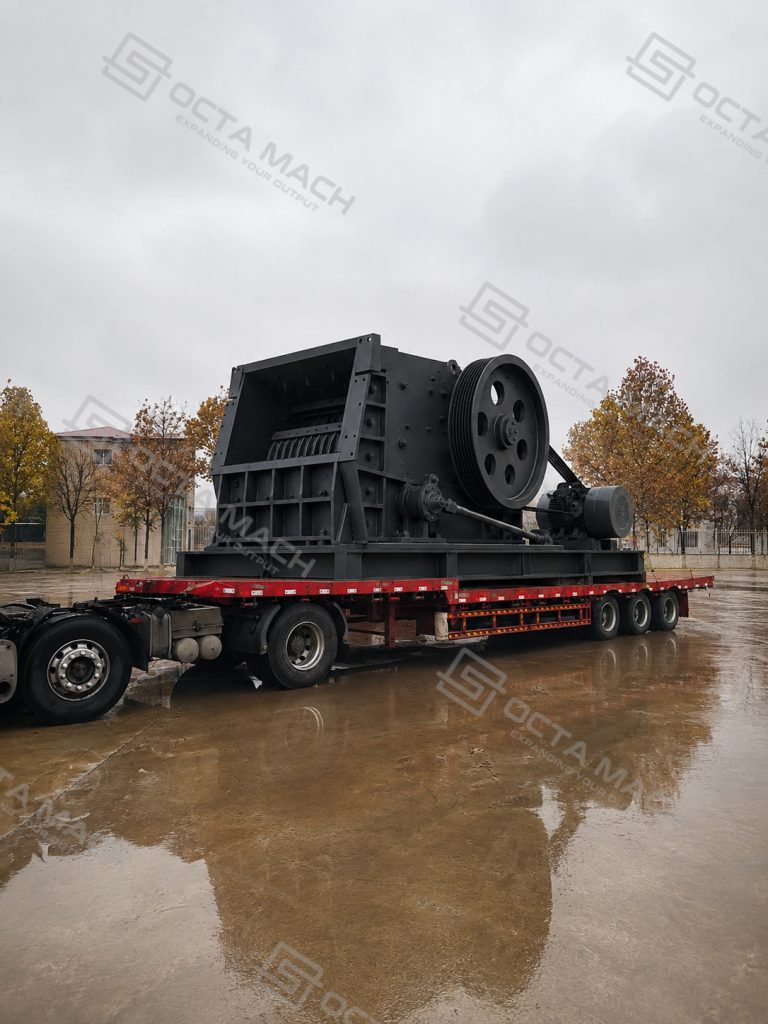
PE-600×900 jaw crusher for quarry duty was selected for a South African site handling abrasive blasted rock. Positioned at the head of the crushing circuit, the machine accepts coarse quarry feed and reduces it to a size suitable for onward conveying and secondary processing. Its 600 × 900 mm feed opening, 500 mm maximum feed size and 65–160 mm adjustable discharge range provide the working envelope required for this primary crushing stage.
This mining jaw crusher project in South Africa was shaped by a straightforward operating requirement: large and irregular feed had to be reduced consistently without making the primary stage unnecessarily complex. The quarry therefore needed a robust compression crusher, a controlled feed arrangement and enough discharge flexibility to keep the rest of the plant supplied without overloading the downstream equipment.For this project profile, the assumed duty is a road-stone quarry in Northern Cape Province processing blasted dolerite, with a 110–130 t/h design target and a nominal 100 mm discharge setting.
Project at a Glance
| Project Item | Details |
|---|---|
| Location | Northern Cape Province, South Africa |
| Project type | Road-stone aggregate quarry |
| Application | Primary crushing in a quarry |
| Feed material | Blasted dolerite |
| Typical feed size | 250–450 mm; controlled below 500 mm |
| Selected crusher | PE-600×900 jaw crusher |
| Feed opening | 600 × 900 mm |
| Maximum feed size | 500 mm |
| Discharge adjustment range | 65–160 mm |
| Selected operating setting | Nominal 100 mm discharge setting |
| Design throughput target | 110–130 t/h |
| Rated capacity | 50–180 t/h |
| Eccentric shaft speed | 250 r/min |
| Motor power | 75 kW |
| Machine weight | 17 t |
| Overall dimensions | 2190 × 2206 × 2300 mm |
| Primary-section arrangement | Hopper → vibrating grizzly feeder → PE-600×900 → discharge conveyor → secondary cone crusher → three-deck screen |
This is a representative project design profile. The figures above are manufacturer-rated specifications; the 110–130 t/h figure is a design target, not a verified operating result. Actual site output depends on feed gradation, rock strength and abrasiveness, moisture and fines content, discharge setting, jaw plate condition, feeder performance and the capacity of the downstream circuit.
Matching the Crusher to Abrasive Quarry Rock
Blasted quarry feed rarely reaches the crusher in a uniform stream. Large fragments arrive with smaller stone and fines, while changes in the blast pattern can alter the proportion of oversize material from one bench to the next. At the primary stage, the crusher must accept these variations without allowing occasional large pieces to interrupt material flow.In this profile, the blasted dolerite feed is typically 250–450 mm, with a vibrating grizzly feeder controlling pieces above the 500 mm machine limit.
For this duty, the crusher reduces material by compression between the fixed and moving jaw plates. This operating principle is suited to the first reduction of coarse blasted rock, where the objective is to prepare a controlled feed for the downstream circuit rather than produce final aggregate directly.
The PE-600×900 was selected as the primary crusher for abrasive rock because its 500 mm maximum feed limit and 65–160 mm discharge adjustment range define both sides of the primary crushing duty: what can enter the chamber and what can be passed to the next stage. Jaw plates remain the principal wear parts, so their profile and fastening condition should be included in the quarry’s routine inspection plan.
Why the PE-600×900 Was Selected
Model selection began with the largest expected feed rather than the nominal hourly target alone. The crusher’s 500 mm listed maximum feed size gives the plant a defined limit for incoming rock. A feeder or grizzly ahead of the crusher is still important: material above the allowable size should be removed or broken before it reaches the chamber, and fine material can be controlled to avoid unnecessary loading.
The 65–160 mm discharge adjustment range provides room to balance reduction and throughput. A tighter setting produces a smaller primary-crushed product but can reduce capacity and increase the load on the chamber. A wider setting generally allows more material to pass, although the resulting product must remain acceptable to the next crusher, screen or conveyor. For the 110–130 t/h design target, the profile uses a nominal 100 mm setting to supply the secondary cone crusher.
For this reason, the PE-600×900 was treated as a primary jaw crusher for quarry operation rather than as an isolated machine. The selected discharge setting had to suit the complete circuit. Feeder delivery, discharge conveyor capacity and the receiving limits of the next processing stage were considered alongside the jaw crusher’s rated range of 50–180 t/h.
The 75 kW drive and 250 r/min eccentric shaft speed are standard configuration data for the model. They define the installed machine, but they should not be read as a guarantee of one fixed site output. Quarry rock characteristics and the way material is presented to the chamber have a direct influence on production.
Large Feed Opening for the Primary Stage
The 600 × 900 mm inlet is one of the main reasons this model fits a medium-scale quarry duty. As a large feed opening jaw crusher, it can receive substantial blasted fragments while maintaining a compact footprint compared with larger PE models. The rectangular opening also gives the feeder a clear target for distributing material across the chamber width.
The primary section is arranged around the receiving hopper, vibrating grizzly feeder, PE-600×900 jaw crusher, discharge conveyor, secondary cone crusher and three-deck screen. The upstream equipment must keep rock above the 500 mm feed limit out of the chamber, while the feeder should distribute material across the jaw width instead of loading one side repeatedly.
Below the crusher, the discharge conveyor must accept material produced at the nominal 100 mm setting without buildup under the frame.Access around the toggle assembly, bearings, drive and jaw plates should also be retained in the layout, allowing wear checks and routine adjustment work to be carried out without disturbing the rest of the crushing line.
Managing Wear and Maintaining Stable Material Flow
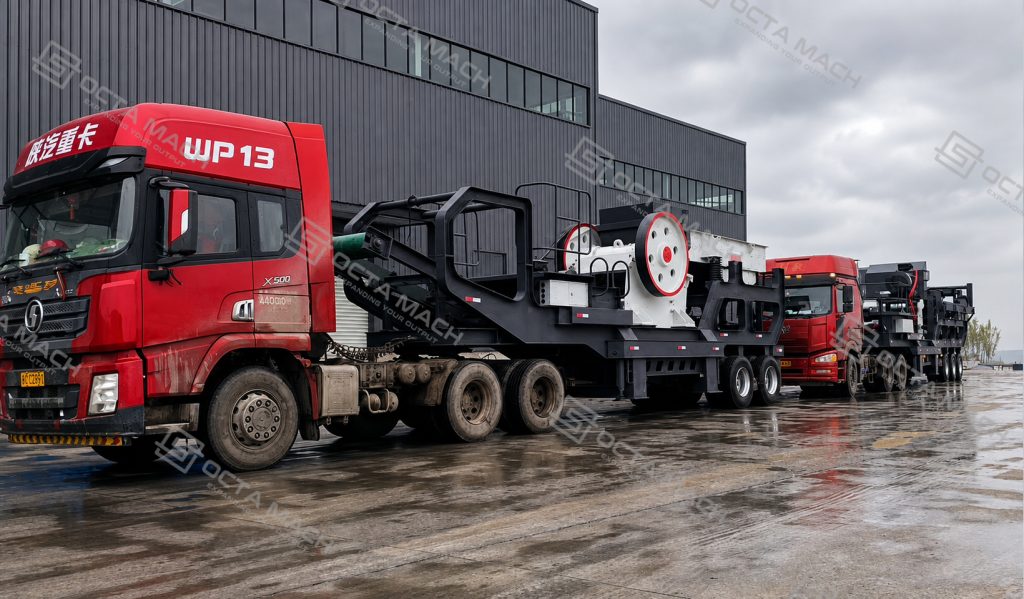
For abrasive blasted rock, jaw-plate condition is a direct operating variable rather than a routine maintenance detail. As the tooth profile becomes rounded or wears unevenly, the crusher may grip large fragments less effectively and the primary product can become less consistent. Plate wear should therefore be checked together with the discharge setting, rather than being assessed by running hours alone.
The operating checks for this PE-600×900 jaw crusher include jaw-plate fasteners, bearing temperature, toggle assembly condition, belt tension, lubrication points and any change in vibration or discharge pattern. These checks are particularly relevant when feed gradation changes between quarry benches or when the proportion of fines increases.
Stable throughput also depends on controlled feed presentation. Oversize rock can cause chamber blockage or abnormal loading, while excessive fines can reduce effective crushing action. Keeping the feed within the 500 mm limit and distributing it evenly across the chamber helps the crusher supply a more stable primary product to the downstream conveyor and secondary stage.
Building a Reliable Front End for the Quarry
The PE-600×900 gives the South African quarry a clearly defined first stage: accept blasted rock within the 500 mm feed limit, reduce it through compression and discharge it within the setting range required by the next part of the plant. Its role is not to produce a final graded aggregate in one pass. It is to create a manageable and repeatable feed for subsequent crushing or screening.
The jaw crusher is installed between the receiving hopper and the discharge conveyor, so its setting must match the capacity and maximum feed size accepted by the next crushing or screening stage. With the PE-600×900, the primary product is controlled within the 65–160 mm adjustment range rather than being treated as a final aggregate size.
For abrasive quarry rock, stable operation depends on three practical controls: keeping oversize material above 500 mm out of the chamber, feeding rock evenly across the 600 mm jaw width, and monitoring jaw-plate wear before an uneven profile affects product size or throughput. At the nominal 100 mm setting, these controls are intended to support the 110–130 t/h design target while preparing feed for the secondary cone crusher and three-deck screen.
FAQ
Why was the PE-600×900 selected for this quarry project?
Its 600 × 900 mm feed opening and 500 mm maximum feed specification matched the required primary crushing duty, while the 65–160 mm discharge range allowed the crusher output to be coordinated with the downstream circuit.In this representative profile, a nominal 100 mm setting is used ahead of secondary cone crushing.
Does the rated capacity mean the quarry will always produce 50–180 t/h?
No. The figure is the model’s rated range, not a guaranteed site result. The 110–130 t/h figure used here is a design target. Actual output is affected by feed gradation, rock properties, moisture and fines, discharge setting, jaw plate wear, feeder consistency and downstream capacity.
What requires the most attention when crushing abrasive rock?
Jaw plate wear, feed distribution and oversize control require close attention. Uneven feed can concentrate wear on one side of the chamber, while material above the allowable feed size can cause blockage or abnormal loading.
What equipment normally works with the jaw crusher at the primary stage?
This profile uses a receiving hopper, vibrating grizzly feeder, PE-600×900 jaw crusher, discharge conveyor, secondary cone crusher and three-deck screen. The final screen setup depends on the required road-stone product sizes.