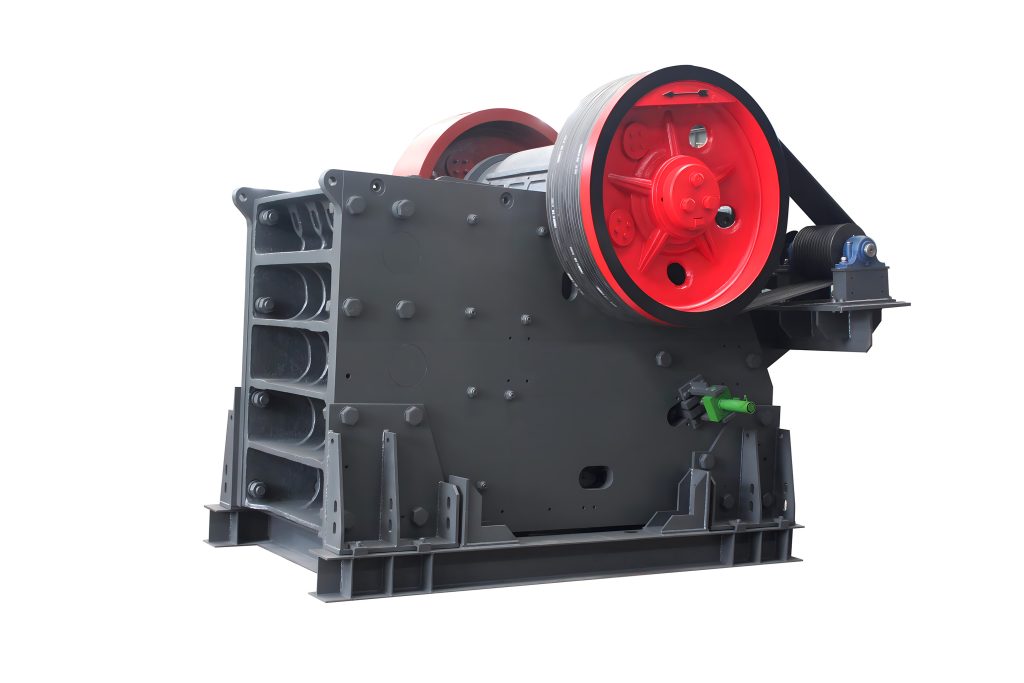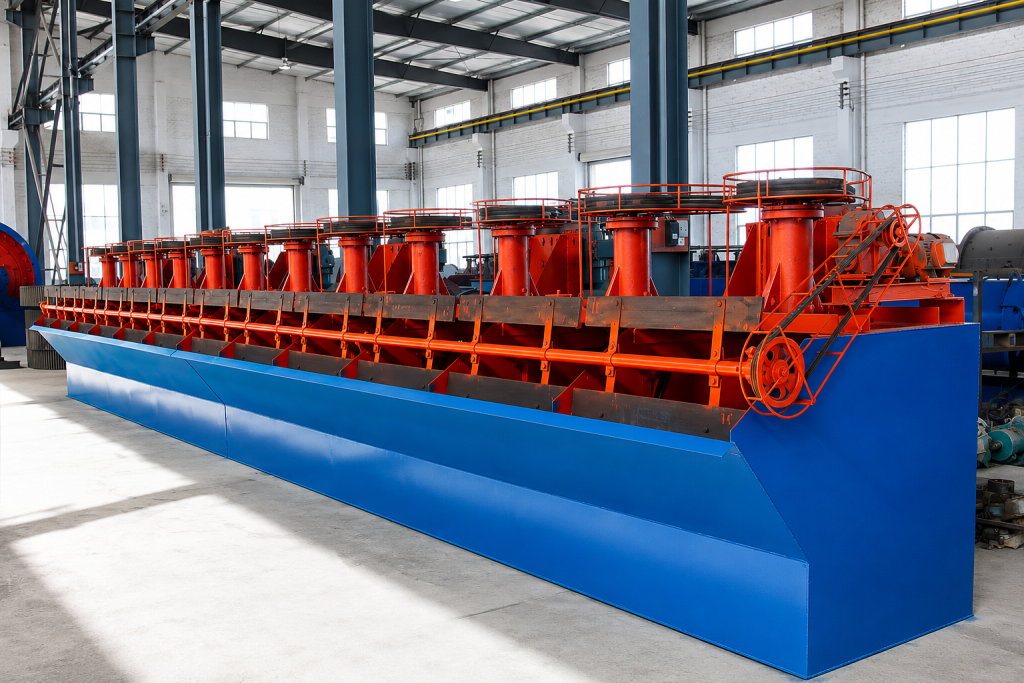
Single-cylinder hydraulic cone crusher and a multi-cylinder hydraulic cone crusher both reduce rock by compression between a gyrating mantle and a stationary concave. Single-cylinder models are commonly used for secondary and medium crushing of limestone, granite, river stone and mineral ores where larger feed acceptance and a compact hydraulic arrangement are important. Multi-cylinder models are frequently selected for hard and abrasive materials such as granite, basalt, quartzite and iron ore in tertiary or fine-crushing circuits that require stable chamber loading, controlled product gradation and a higher proportion of cubical aggregate.
The difference is not simply that one crusher has one hydraulic cylinder and the other has several. The cylinder arrangement changes how the machine supports the crushing assembly, adjusts the closed side setting, locks the selected chamber position, releases tramp material and clears a stalled cavity. These structural differences also determine the main hydraulic and mechanical inspection points during operation.
Single-Cylinder vs Multi-Cylinder Cone Crusher at a Glance
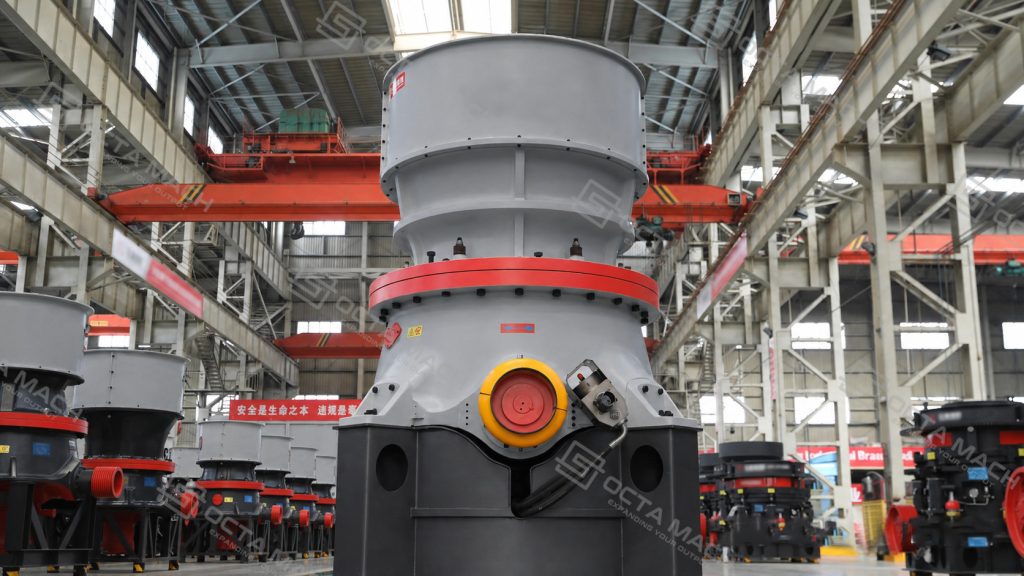
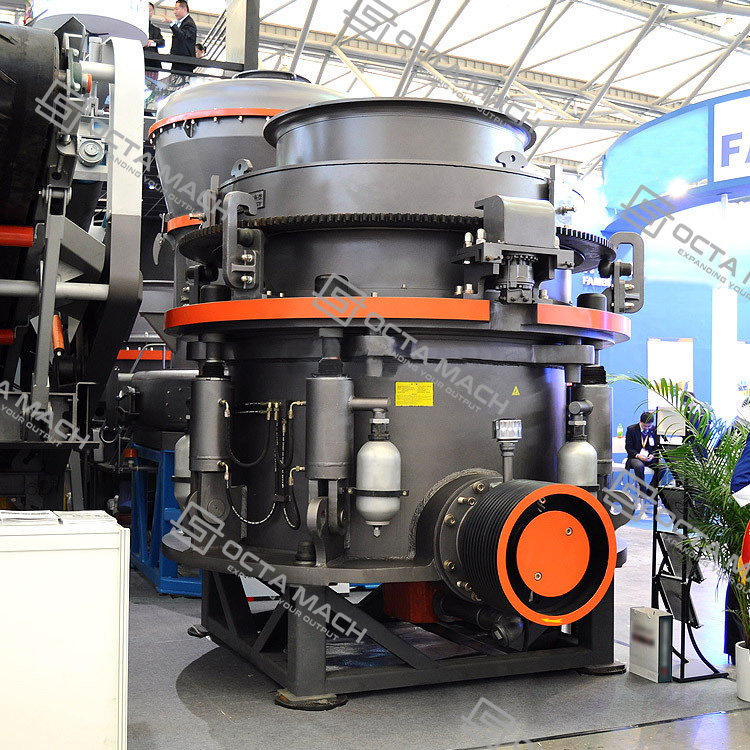
Single-cylinder and multi-cylinder cone crushers differ mainly in main-shaft support and CSS adjustment. A single-cylinder design typically moves the mantle vertically through a lower hydraulic piston, while many multi-cylinder designs use a fixed main shaft with a hydraulically locked bowl or adjustment ring.
| Comparison Area | Single-Cylinder Hydraulic Cone Crusher | Multi-Cylinder Hydraulic Cone Crusher |
|---|---|---|
| Main hydraulic arrangement | One main hydraulic cylinder commonly supports setting adjustment, overload response and cavity clearing | Multiple hydraulic cylinders commonly support clamping, tramp release and chamber clearing |
| Typical main-shaft arrangement | The main-shaft assembly is commonly adjusted vertically through a lower hydraulic piston | Many HP-style designs use a fixed main shaft with an eccentric and moving-cone assembly rotating around it |
| CSS adjustment | The main shaft and mantle are raised or lowered hydraulically | The bowl, adjustment ring or upper liner assembly is repositioned |
| Setting retention | Maintained through hydraulic pressure and the main-shaft support system | Maintained through an adjustment ring and hydraulic locking system |
| Typical application tendency | Frequently selected for secondary and medium crushing with relatively large feed | Frequently selected for tertiary, fine or high-load closed-circuit crushing |
| Feed sensitivity | Requires controlled top size and stable chamber filling | Particularly dependent on continuous, evenly distributed full-chamber feeding in fine crushing |
| Main maintenance focus | Main cylinder, piston sealing, shaft bushings, eccentric and lubrication | Locking cylinders, release cylinders, adjustment ring, eccentric, bushings and lubrication |
| Final selection basis | Feed distribution, cavity, CSS, required capacity and circuit arrangement | Feed distribution, cavity, CSS, required capacity and circuit arrangement |
Single-cylinder crushers are often used for secondary crushing with larger feed, while multi-cylinder models are commonly selected for stable tertiary or fine crushing. Final selection should still consider feed grading, cavity, CSS, abrasiveness, target product, screen capacity and circulating load.
What Does the Cylinder Arrangement Actually Change?
The hydraulic cylinder does not create the normal rock-breaking force. Crushing occurs when the eccentric mechanism drives the moving cone to gyrate, compressing material between the mantle and concave. The hydraulic system instead controls chamber position, CSS adjustment, overload protection and cavity clearing.
In a typical single-cylinder cone crusher, the main shaft, mantle and moving-cone assembly are supported from below by one hydraulic piston. Changing the oil volume in this cylinder raises or lowers the entire assembly, directly increasing or reducing the CSS. The same hydraulic circuit can also lower the shaft temporarily when tramp material enters the chamber or when packed material must be cleared. In many multi-cylinder cone crushers, the main shaft remains fixed in the frame while the eccentric sleeve drives the moving cone around it. CSS is adjusted by repositioning the bowl, concave or adjustment-ring assembly, after which several hydraulic cylinders clamp the upper structure in place. During overload, these cylinders release the clamping force or allow controlled movement of the upper assembly, enlarging the discharge opening so uncrushable material can pass.
These arrangements create different load paths, adjustment methods and maintenance points, but neither guarantees better crushing performance by itself. Capacity and product gradation still depend on cavity profile, eccentric motion, operating speed, available power, feed distribution and the material level maintained inside the chamber.
Structural Differences Between Single- and Multi-Cylinder Cone Crushers
The key structural difference is how the crusher supports the main shaft and changes the chamber setting. In a typical single-cylinder design, the shaft assembly moves vertically through a lower hydraulic piston; in many multi-cylinder designs, the main shaft remains fixed while the bowl or adjustment ring is repositioned and hydraulically locked.
| Structural Area | Typical Single-Cylinder Design | Typical Multi-Cylinder Design | Practical Effect |
|---|---|---|---|
| Main shaft | Commonly moves vertically with the mantle assembly | Commonly fixed in the main frame in HP-style designs | Determines how CSS is adjusted and how loads are supported |
| Moving cone | Frequently connected to the vertically adjustable shaft assembly | Gyrates around the fixed shaft under eccentric action | Changes bushing, eccentric and support arrangement |
| Upper liner assembly | Normally has fewer hydraulic clamping components around the bowl | Commonly uses a bowl, adjustment ring and locking system | Adds adjustment-ring and locking-pressure inspection points |
| CSS adjustment | Hydraulic oil raises or lowers the shaft assembly | Bowl or upper liner position changes relative to the mantle | Requires different adjustment and calibration procedures |
| Tramp protection | Main hydraulic cylinder releases or lowers the assembly | Multiple release cylinders allow upper-frame movement | Temporarily enlarges the chamber for uncrushable material |
| Cavity clearing | Shaft movement increases the discharge opening | Clearing cylinders release or raise the upper assembly | Reduces manual removal of stalled material |
| Wear compensation | Additional shaft travel maintains the setting as liners wear | Bowl or adjustment-ring movement compensates for liner wear | True CSS still requires periodic verification |
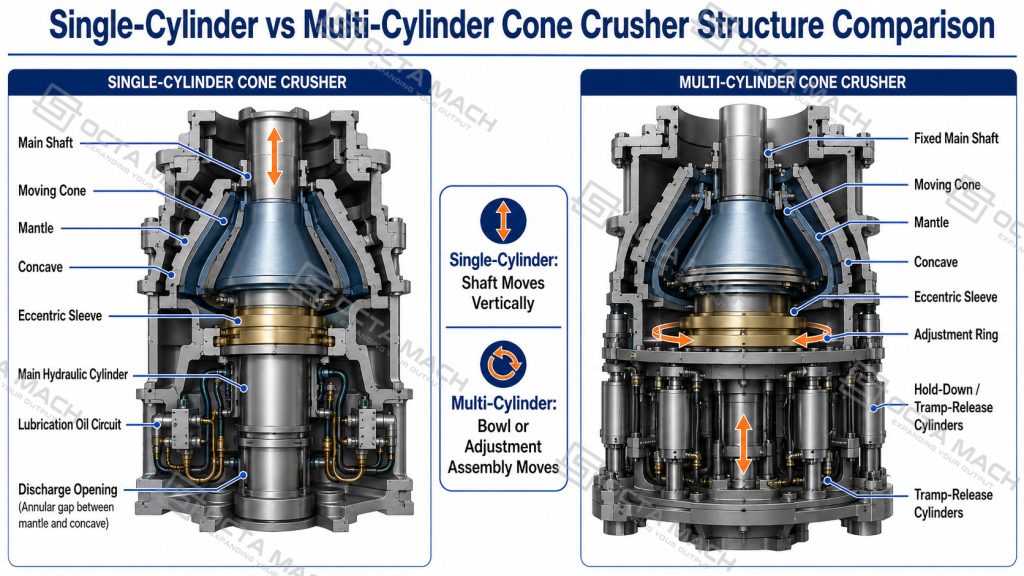
These structural differences determine the CSS adjustment method, tramp-release path, cavity-clearing action and main maintenance points. Actual capacity and product gradation still depend on cavity selection, feed distribution, CSS, liner condition and the complete screening circuit.
CSS Adjustment, Tramp Release and Cavity Clearing
The closed side setting is the smallest distance between the lower mantle and concave during one gyrating cycle. CSS influences the product curve, volumetric throughput, crushing pressure, power draw and circulating load. It is one of the most important operating values in any cone crusher circuit.
CSS Adjustment in a Single-Cylinder Crusher
In a typical single-cylinder system, hydraulic oil enters or leaves the main cylinder below the shaft. The piston then moves the main shaft and mantle vertically. Raising the mantle reduces the gap between the mantle and concave; lowering it increases the gap.
This arrangement allows the main cylinder to perform several related functions. It adjusts the setting during normal operation, compensates for progressive liner wear, and increases the discharge opening when the chamber must be cleared. Because these functions are concentrated in one main hydraulic assembly, piston sealing, oil pressure, accumulator condition and shaft movement must remain stable.
A setting command on the control system does not remove the need for physical verification. Wear on the mantle and concave changes the chamber profile, so the actual relationship between shaft position and discharged product gradually changes during liner life.
CSS Adjustment in a Multi-Cylinder Crusher
In a common multi-cylinder crusher, the bowl or upper liner assembly is repositioned to change the distance between the concave and mantle. Once the required setting is reached, multiple cylinders provide hydraulic locking to hold the upper assembly in position.
The adjustment-ring threads, clamping pressure and bowl movement are important because any unintended movement can change the CSS during operation. In high-load applications, unstable locking pressure or excessive chamber force may cause movement of the adjustment assembly, producing fluctuating product size and abnormal wear.
Tramp Release and Cavity Clearing
Tramp release protects the crusher when steel, excavator teeth or other uncrushable objects enter the chamber. The hydraulic system permits temporary movement that enlarges the discharge opening and limits the load transferred to the shaft, frame and liners.
After the object passes, the system should recover to its operating position. The CSS should then be checked, particularly after a severe release event, because hydraulic recovery does not always guarantee that the actual chamber setting and liner position remain unchanged.
Cavity clearing is required when the crusher stops with material packed inside the chamber. Restarting against a fully loaded cavity can overload the motor and mechanical components. The hydraulic clearing function opens the chamber sufficiently for trapped material to discharge before normal operation resumes.
| Hydraulic Function | Purpose | Operating Condition to Confirm |
|---|---|---|
| CSS adjustment | Controls the minimum mantle-to-concave gap | Actual setting remains within the approved cavity range |
| Hydraulic locking | Holds the selected position during crushing | Pressure is stable and the adjustment assembly does not move |
| Tramp release | Allows uncrushable material to pass | Release pressure, stroke and recovery operate correctly |
| Cavity clearing | Opens a stalled chamber before restart | Sufficient movement is available to release trapped material |
| Wear compensation | Maintains product control as liners wear | Remaining adjustment travel and liner thickness are acceptable |
The smallest permitted CSS should not automatically be treated as the preferred operating setting. Operating too close to the mechanical limit can increase force, power demand, hydraulic pressure and local liner loading without producing a stable increase in usable fine product.
Liner wear changes the actual chamber profile in both crusher types, so the indicated CSS should be checked against product gradation and physical liner condition. Single-cylinder maintenance mainly focuses on the main hydraulic piston, seals, shaft bushings and lubrication circuit, while multi-cylinder maintenance also includes locking cylinders, tramp-release cylinders, the adjustment ring and bowl threads. Neither design is inherently easier to maintain; access, liner-replacement method, spare-parts availability and local service capability are equally important.
Crushing Performance, Throughput and Product Gradation
Under comparable feed and operating conditions, single-cylinder and multi-cylinder cone crushers show different performance tendencies because their chamber structures, adjustment systems and typical cavity configurations are not the same. A single-cylinder hydraulic cone crusher is often configured with a larger feed opening and a relatively direct crushing load path, making it suitable for secondary and medium crushing. A multi-cylinder hydraulic cone crusher is commonly equipped with medium, fine or extra-fine cavities and a hydraulically locked upper assembly, making it well suited to stable tertiary and fine crushing under continuous full-chamber feeding.
These are application tendencies rather than fixed performance rules. Crusher model, cavity volume, CSS, eccentric throw, motor power and feed grading must be comparable before capacity, reduction ratio or product shape can be evaluated.
| Performance Area | Single-Cylinder Cone Crusher | Multi-Cylinder Cone Crusher | Main Condition Affecting the Result |
|---|---|---|---|
| Feed Acceptance | Commonly selected for larger feed in secondary or medium crushing | Commonly receives smaller, more controlled feed in tertiary or fine crushing | Feed opening and cavity profile |
| Throughput Tendency | Can maintain high throughput with a coarse or medium cavity and correctly sized feed | Can provide high throughput at finer duties when the chamber remains fully and evenly fed | Cavity volume, CSS, bulk density and power utilization |
| Reduction Duty | Often used for moderate reduction after a jaw crusher | Often used for higher reduction in tertiary or closed-circuit fine crushing | Feed F80, target P80 and permitted CSS |
| Product Gradation | Commonly produces a broader intermediate product suitable for the next crushing stage | Commonly provides tighter grading when operated with a fine cavity and stable circulating load | CSS, cavity profile, screen cut size and return load |
| Particle Shape | Good shape is achievable with stable chamber filling and correct cavity selection | Often preferred where inter-particle crushing and cubical aggregate are priorities | Choke feeding, 360-degree feed distribution and chamber level |
| Fine Material Generation | Normally lower when operated with coarse or medium cavities | Can generate a higher proportion of fines with fine cavities and tighter settings | CSS, speed, cavity and rock breakage behavior |
| Load Stability | The main-cylinder system responds directly to shaft movement and chamber load | Hydraulic locking supports stable upper-assembly positioning during high-load fine crushing | Feed continuity, tramp events and locking pressure |
| Liner Wear Pattern | Sensitive to oversize feed, uneven distribution and incorrect shaft position | Sensitive to segregation, ring movement and unstable choke feeding | Feed grading, cavity match and operating consistency |
A single-cylinder crusher is often practical after a jaw crusher when the circuit must accept a relatively large feed and produce an intermediate product for further reduction. A multi-cylinder crusher is more commonly installed in tertiary or fine-crushing stages, where the feed has already been controlled and the operating priority shifts toward finer reduction, tighter product gradation and stable particle shape.
These application tendencies depend heavily on cone crusher cavity selection. Coarse cavities provide a larger feed opening and are generally used for secondary crushing, while fine cavities require smaller, well-graded feed and consistent chamber filling. Oversize feed concentrates load near the upper chamber and can reduce throughput, while feed that is too small leaves the upper liner underused and accelerates wear near the discharge zone. The complete feed-size distribution must therefore be checked rather than relying only on the maximum feed size.
The cone crusher CSS must also remain within the approved range of the selected model and cavity. Reducing CSS normally shifts the discharge toward finer sizes, but it also restricts the open area through which material leaves the chamber. If the feed rate or screen return is too high, throughput can fall while crushing pressure, power draw and circulating load increase. Increasing CSS generally raises volumetric throughput but produces a coarser discharge and may increase the amount of oversize returned by the vibrating screen.
A multi-cylinder design does not automatically provide higher plant capacity. A fine-cavity multi-cylinder crusher operating at a tight CSS may process fewer tonnes per hour than a coarse-cavity single-cylinder unit while producing a finer, more controlled product. Capacity comparisons are valid only when feed grading, cavity type, CSS, material density, liner condition and circulating load are equivalent. Performance should therefore be judged by the amount of qualified final product produced by the complete crushing and screening circuit, not simply by the tonnes passing through the cone crusher.
How to Choose Between Single-Cylinder and Multi-Cylinder Cone Crushers
A single-cylinder hydraulic cone crusher is generally the better starting point when the machine follows a jaw crusher, receives a relatively coarse feed and must produce an intermediate product for the next crushing stage. Its larger-feed cavity options, direct hydraulic CSS adjustment and simpler control arrangement make it suitable for secondary crushing of granite, basalt, river pebble and mineral ores. The feed opening and selected cavity must still match the complete feed-size distribution; oversize rock or uneven feeding can reduce capacity and accelerate liner wear.
A multi-cylinder hydraulic cone crusher is more commonly selected for tertiary or fine crushing where the feed has already been controlled and the circuit requires tighter product gradation, stable particle shape and continuous operation at a relatively small cone crusher CSS. Its fixed main shaft, adjustment-ring system and hydraulic locking arrangement support stable chamber positioning under high-load conditions. This design performs best with consistent full-chamber feeding and a correctly matched vibrating screen; unstable feed or excessive circulating load can quickly reduce its practical advantage.
| Selection Condition | Single-Cylinder Tendency | Multi-Cylinder Tendency |
|---|---|---|
| Crushing stage | Secondary or medium crushing | Tertiary or fine crushing |
| Feed condition | Larger controlled feed after primary crushing | Smaller, well-graded feed |
| Product requirement | Intermediate product for further processing | Tighter grading and more cubical aggregate |
| Cavity selection | Coarse or medium cavity | Medium, fine or extra-fine cavity |
| Circuit arrangement | Open circuit or moderate closed circuit | Stable closed circuit with matched screening |
| Operating priority | Feed acceptance and structural simplicity | Fine reduction, chamber stability and grading control |
| Maintenance focus | Main piston, shaft bushings and lubrication | Locking cylinders, adjustment ring, tramp release and lubrication |
Final cone crusher selection should be based on the rock type and abrasiveness, maximum feed size, full feed curve, required final product, normal and peak capacity, permitted CSS, cavity profile, screen efficiency and return-load capacity. Neither design should be selected from motor power or catalogue throughput alone; the correct choice is the crusher that produces the required qualified product within the limits of the complete crushing and screening circuit.
FAQ
Q1:Which cone crusher is better for hard and abrasive rock?
A1:Multi-cylinder cone crushers are often selected for controlled tertiary or fine crushing of granite, basalt and abrasive ores. A single-cylinder crusher can still be suitable for hard-rock secondary crushing when its feed opening, cavity and liner material match the actual feed.
Q2:Does a multi-cylinder cone crusher always produce more capacity?
A2:No. Capacity depends on cavity volume, CSS, feed gradation, bulk density, power utilization, liner condition and circulating load. A coarse-cavity single-cylinder crusher can process more tonnes per hour than a fine-cavity multi-cylinder unit while producing a coarser product.
Q3:Can the same CSS be used to compare single-cylinder and multi-cylinder crushers?
A3:Not directly. The same numerical CSS can produce different throughput and product gradation because chamber profile, eccentric movement, operating speed and feed condition differ between models.
Q4:Why can a cone crusher produce poor particle shape even when the correct model is installed?
A4:Common causes include intermittent feeding, one-sided feed, particle segregation, an incorrectly matched cavity and excessive screen return. Stable full-chamber feeding and even 360-degree distribution are required to maintain effective lamination crushing and consistent product shape.