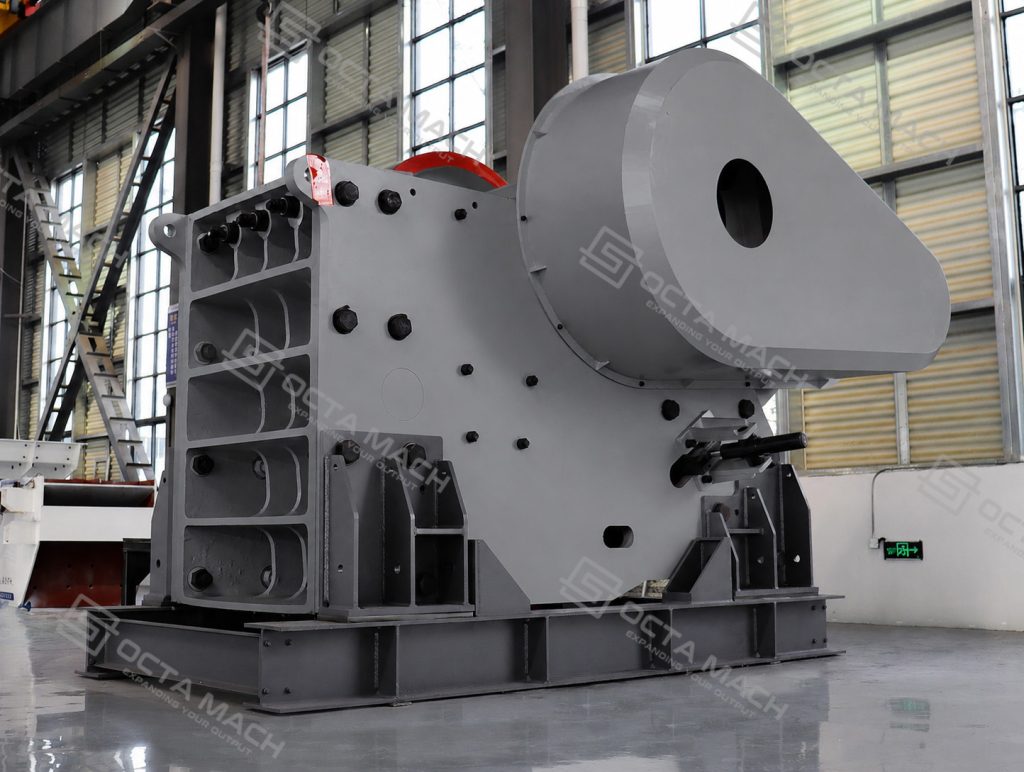
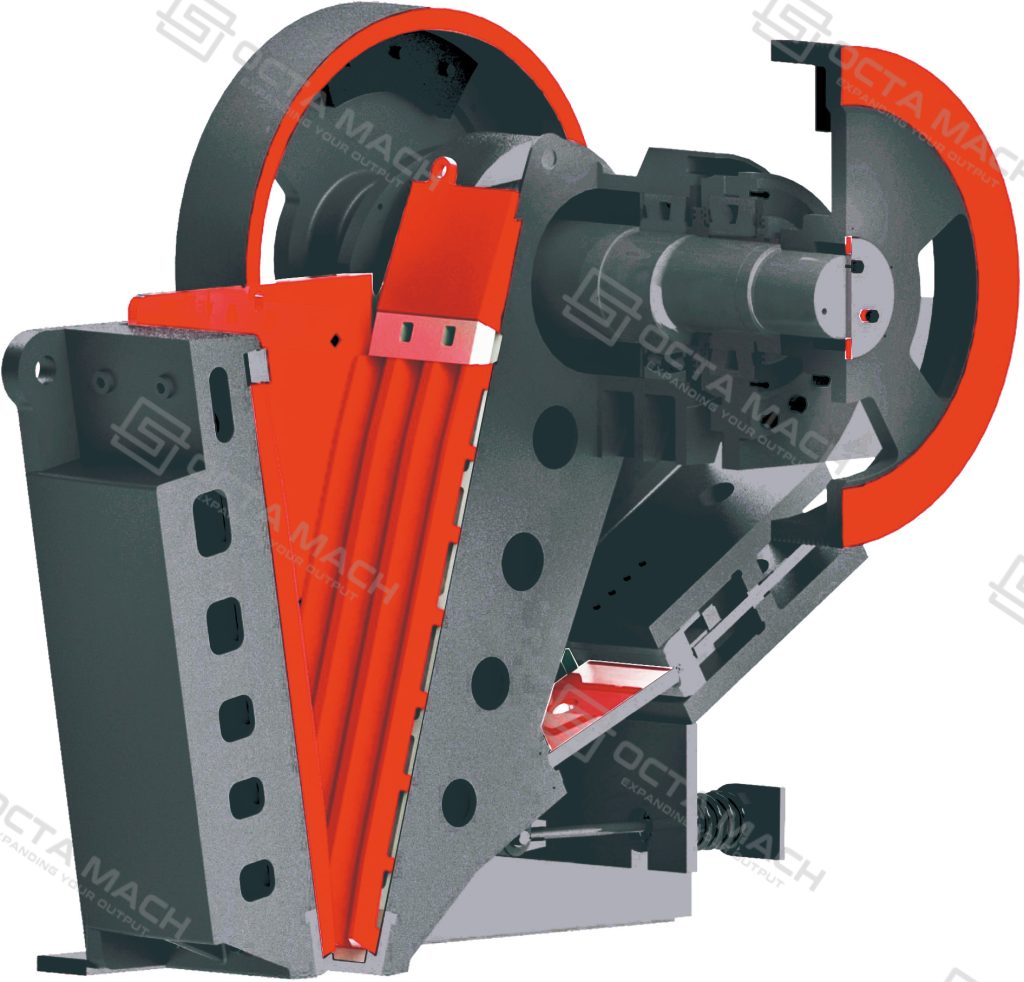
Jaw plates are the manganese-steel crushing surfaces installed on the fixed and moving jaws of a jaw crusher. They compress large rock during primary crushing, but progressive tooth-profile wear can reduce material grip, increase CSS adjustments and make the discharge less stable.
Jaw plate replacement should therefore be based on condition rather than operating hours alone. Wear distribution, remaining tooth shape, plate thickness, crusher capacity and product-size consistency must be considered together.
Why Jaw Plate Wear Patterns Matter
Jaw plate wear is not limited to material loss. It gradually changes the geometry of the crushing chamber.
As the teeth become rounded or flat:
- feed grip becomes weaker
- material may slip or bounce in the chamber
- the effective crushing angle changes
- throughput can decline
- discharge gradation becomes less stable
- operators may repeatedly reduce the CSS to maintain product size
A predictable wear pattern normally indicates that the chamber, feed and operating settings are reasonably matched. Deep grooves, one-sided wear, cracking or rapid lower-zone wear usually indicate an operating or application problem.
Normal Jaw Plate Wear
Normal wear develops progressively through the active crushing area. Tooth peaks become rounded, grooves become shallower and plate thickness decreases without severe local damage.
The fixed and moving jaw plates may not wear at exactly the same rate because they experience different movement and loading. A moderate difference is not automatically abnormal. The more important indicators are:
- whether wear remains relatively uniform across the chamber width
- whether the crusher maintains stable feed intake
- whether capacity and discharge size remain consistent
- whether the plates remain securely seated and fastened
Wear should be compared at the upper, middle and lower sections of both plates. A single measurement cannot show how loading is distributed inside the chamber.
Common Jaw Plate Wear Patterns
| Wear pattern | Likely causes | Inspection focus |
|---|---|---|
| Even tooth rounding | Normal progressive wear | Tooth height, plate thickness and output trend |
| Flat tooth profile | Excessive service time or delayed rotation | Feed grip, throughput and CSS history |
| Heavy lower-zone wear | Tight CSS, excessive fines or small feed | Feed gradation and operating setting |
| Centre-line wear | Feed concentrated in the middle | Feeder width and chute alignment |
| One-sided wear | Off-centre feeding or material segregation | Feed direction across the chamber |
| Polished surface | Poor grip or unsuitable tooth profile | Feed shape and jaw profile |
| Broken teeth or cracks | Tramp metal, impact overload or unsuitable plate grade | Chamber, fasteners and seating surfaces |
| Loose jaw plate | Worn wedges, bolts or contact surfaces | Complete retention system |
These observations are diagnostic clues rather than final conclusions. For example, one-sided wear may be caused by a misaligned feeder, but it can also result from coarse and fine particles separating before they enter the crusher.
Main Causes of Abnormal Jaw Plate Wear
Uneven Feeding
Material should enter across the usable width of the crushing chamber. A narrow or off-centre feed stream forces one section of the jaw plate to perform most of the crushing work.
The feeder, hopper and transfer chute should be checked when wear is concentrated:
- in the centre
- on one side
- at one corner
- in a narrow vertical band
Correcting feed distribution is essential. Installing new plates without correcting the feed path usually reproduces the same wear pattern.
Incorrect Feed Size Distribution
Jaw crushers perform best with a controlled mixture of particle sizes. Several feed conditions can accelerate wear:
- excessive oversize material creates high local impact
- too many fines increase unnecessary contact and packing
- uniformly large particles reduce chamber filling
- flat or slab-shaped rock may bridge or enter irregularly
- segregated feed loads different areas of the chamber unevenly
A grizzly feeder can remove material already smaller than the required crusher setting. However, excessive scalping can also produce an unstable, coarse-only feed. The objective is a continuous and manageable feed distribution, not simply the removal of every small particle.
Closed-Side Setting Below the Recommended Range
The closed-side setting, or CSS, is the minimum distance between the jaw plates during the crushing cycle. It influences product size, capacity, chamber loading and wear.
Operating with an excessively tight CSS concentrates more crushing work near the discharge end. This can cause:
- rapid lower-plate wear
- increased power demand
- material packing
- unstable discharge
- higher loading on the jaw retention system
A tighter setting should not be used indefinitely to compensate for worn teeth. The minimum permitted CSS must be confirmed for the specific crusher model and jaw profile.
Incorrect Jaw Plate Profile
Jaw plate tooth geometry affects how material is gripped, compressed and discharged.
A suitable profile depends on:
- feed size
- rock hardness
- abrasiveness
- particle shape
- fines content
- required CSS
- target product gradation
A profile with wider tooth spacing may release sticky material or fines more easily. A more aggressive profile may improve grip on smooth or slab-shaped feed. The wrong profile can create slipping, packing, reduced capacity or concentrated wear.
Material Abrasiveness
Silica-rich granite, basalt, quartzite and some recycled materials normally produce faster abrasive wear than softer limestone or gypsum.
Material hardness alone is not enough to predict wear. The assessment should also consider:
- mineral composition
- silica content
- moisture
- clay contamination
- feed shape
- uncrushable metal
- required reduction ratio
Wear performance should be measured as processed tonnes per set of plates, not only days or operating hours.
Tramp Metal and Impact Overload
Steel fragments, excavator teeth, drilling components and other uncrushable objects can produce local impact loads that exceed normal crushing conditions.
Possible results include:
- chipped or broken teeth
- plate cracking
- loosened wedges
- deformed fastening components
- damage to jaw seating surfaces
Cracked or loose plates should not remain in operation while waiting for a scheduled shutdown. The chamber and complete retention system require inspection before restarting.
When Should Jaw Plates Be Rotated?
Some jaw plates are reversible or can be repositioned to use less-worn sections. Others have a directional profile and must remain in their original orientation.
Rotation is appropriate only when:
- the plate design permits it
- the remaining section has a usable tooth profile
- minimum thickness requirements are still satisfied
- the new position preserves the intended chamber geometry
- fastening and seating surfaces remain serviceable
Rotation timing should be determined from measured wear distribution rather than a universal percentage or number of operating hours. The correct procedure must follow the maintenance requirements for the specific crusher and plate design.
When Should Jaw Plates Be Replaced?
Jaw plates should be replaced when their condition begins to affect crushing performance or component protection.
Key replacement indicators include:
- tooth peaks are substantially flattened
- material grip has noticeably declined
- the crusher requires frequent CSS correction
- capacity falls under unchanged feed conditions
- product size becomes increasingly inconsistent
- remaining plate thickness reaches the specified limit
- fastening areas or backing surfaces are exposed
- cracks, broken teeth or local deformation appear
- the plate no longer sits firmly against the jaw
- worn plates risk exposing the jaw body or supporting components
There is no universal minimum thickness for every jaw plate. The permissible limit depends on the crusher model, plate design, fastening arrangement and measurement position.
Jaw Plate Condition Decision Table
| Observed condition | Recommended action |
|---|---|
| Even wear, effective teeth and stable output | Continue operation and monitor |
| Local wear with acceptable thickness | Inspect feed distribution and CSS |
| Uneven wear on a reversible plate | Rotate only if approved for that design |
| Flat teeth and poor material grip | Schedule replacement |
| Thickness at the specified wear limit | Replace |
| Cracks, broken teeth or looseness | Stop and inspect immediately |
How to Inspect Jaw Plate Wear
A useful inspection combines physical measurements with operating data.
Record the following information for both fixed and moving plates:
| Inspection item | Required record |
|---|---|
| Crusher identification | Model and serial or equipment number |
| Jaw plate identification | Fixed and moving plate part numbers |
| Installation record | Installation date and operating hours |
| Processed material | Rock type and relevant feed characteristics |
| Processed tonnage | Total tonnes since installation |
| Feed condition | Maximum size, gradation and fines content |
| CSS | Current setting and adjustment history |
| Tooth condition | Upper, middle and lower wear measurements |
| Plate thickness | Measurements at specified reference points |
| Performance | Capacity and product-size trend |
| Wear pattern | Even, localised, polished, cracked or loose |
| Maintenance decision | Continue, rotate, investigate or replace |
Measurements should always be taken at the same reference points. This makes one inspection comparable with the next and helps determine whether wear is progressing normally.
How to Extend Jaw Plate Service Life
Jaw plate life depends on both material selection and operating discipline.
Effective controls include:
- centre the feed over the crushing chamber
- distribute material across the chamber width
- keep maximum feed within the permitted range
- maintain a controlled feed-size distribution
- remove unnecessary fines before crushing
- avoid operating below the specified minimum CSS
- select the tooth profile for the actual feed
- inspect wedges, bolts and seating surfaces regularly
- rotate plates only where the design allows it
- compare wear cost by processed tonne
The longest-lasting plate is not automatically the most economical option. A plate that lasts longer but reduces capacity or creates poor product gradation may increase the total production cost.
Jaw Plate Replacement Checks
Before removing the plates, confirm the exact crusher model, part numbers, plate orientation and approved lifting method. The crusher must be isolated, emptied and secured according to the site lockout procedure.
While the chamber is open, inspect:
- fixed and moving jaw seats
- wedges and bolts
- backing and protection plates
- cheek plates
- contact surfaces
- lifting points and retention components
After installation:
- Confirm the fixed and moving plates are correctly positioned.
- Tighten the retention system according to the equipment requirements.
- Check that each plate sits fully against its support surface.
- Reset and measure the CSS.
- Run the crusher under controlled feed.
- Reinspect fastening components after the initial operating period.
- Record baseline tooth and thickness measurements.
FAQ
F1: How do I choose the correct jaw crusher size?
Q1: Select the model from the maximum feed size, required capacity, target discharge size and material characteristics. As a common sizing reference, the largest feed particle should normally remain below about 80% of the crusher feed opening, subject to the exact model and feed shape.
F2: When should jaw crusher plates be replaced?
Q2: Replace the plates when the teeth no longer grip the feed, thickness reaches the model-specific wear limit, cracks or looseness appear, or capacity and product-size stability decline. Replacement timing should be based on measured condition and processed tonnage, not operating hours alone.
F3: How does CSS affect jaw crusher capacity and product size?
Q3: A smaller closed-side setting (CSS) generally produces a finer discharge but reduces material flow and can increase jaw plate wear. A larger CSS normally improves throughput but produces a coarser product. The setting must remain within the permitted range of the selected model.
F4: How should jaw plates be selected for different materials?
Q4: Jaw plate selection depends on material abrasiveness, feed gradation, particle shape, fines content, impact loading and operating CSS. The tooth profile and manganese-steel grade should be matched to the application rather than selected only by hardness or alloy content.